Even as AI Marketing Spreads, Only 25% Use It for Influencer Marketing
AI adoption has spread quickly across marketing, but influencer marketing is still lagging. A survey of more than 100 marketing professionals in the first quarter of 2026 found that only 25% said they use AI for influencer marketing. That is less than half the share for social media (49%) and retail media (42%).
Among marketers who do use AI, applications are largely concentrated in analysis and matching. Seventy-five percent said they use AI for data analysis, 63% for content creation, and 56% for influencer discovery and outreach. Influencer agency Later operates an AI system that automatically matches campaign briefs with creators and predicts performance based on past engagement data. Later says that with a single brand now working simultaneously with dozens of small and midsize influencers, it is difficult for people to coordinate this kind of matching manually one by one.
By contrast, in connected TV (CTV) advertising, 82% of marketers said they do not use AI at all. A lack of consumer trust in virtual influencers also remains a persistent obstacle. In a World Federation of Advertisers (WFA) survey, 96% of brands with no plans to adopt virtual influencers cited consumer trust issues as the reason.
Source · Glossy, "Glossy+ Research: Marketers hesitate to adopt AI for influencer and CTV marketing"
Influencer Program Grows 20-Fold With ShopMy Data
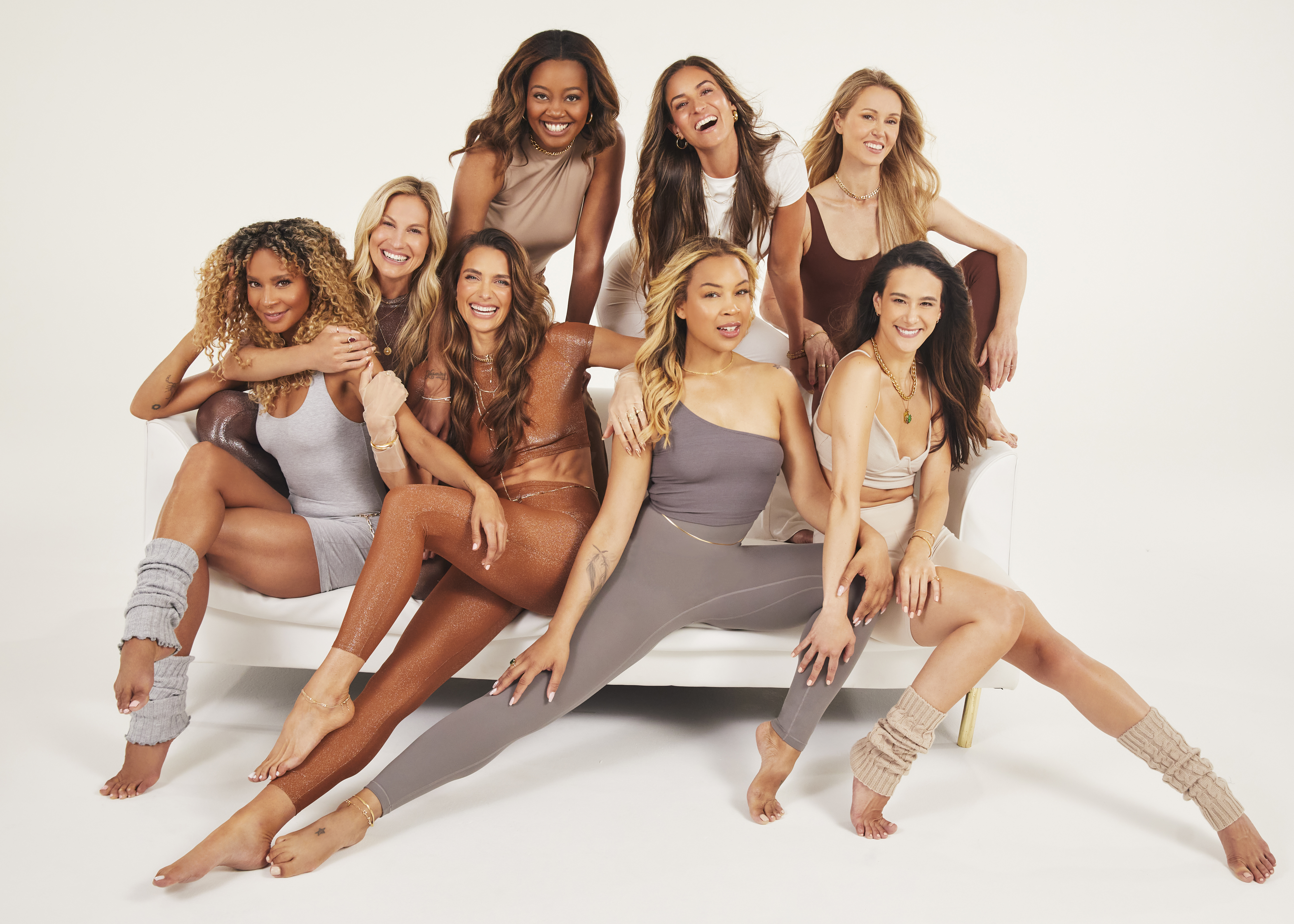
Brands are expanding the scope of their collaborations with influencers beyond awareness campaigns and into the product planning stage. In a survey of 125 brand and agency marketing executives, 88% said they work with influencers on seasonal campaigns, while 78% said they involve influencers in new product launches.
Home furnishings brand Ruggable partnered with chef and influencer Dan Pelosi to release a co-created product collection. The catalyst was performance on ShopMy, a creator-recommended commerce platform. Ruggable Chief Marketing Officer Lauren Sherman-Coward said the company was able to scale its influencer program 20-fold using ShopMy data. It now uses that data to run collaborations segmented down to the small-influencer level.
The retail industry is seeing a similar trend. In September 2025, Best Buy formed a partnership with creator group Dude Perfect, exposing the brand during the NFL season and holiday campaigns. That same month, Albertsons Media Collective ran a Lunar New Year holiday campaign with influencer marketing agency Linqia, recording engagement rates three times higher on Instagram and four times higher on Facebook than before.
Source · Glossy, "Glossy+ Research: Brands are expanding their creator marketing strategies"
Create the Face of a Brand-Exclusive AI Model From a Single Face Photo
RealSnap’s AI Model Face is a feature that creates five model-face variations based on a single uploaded face photo, then lets you save one of them to Custom Models so it can be recalled for future photo shoots. For lookbook managers or brand marketers who previously had to cast a new model every season or choose a different AI face for each photo-shoot cut, it reduces that repetitive work to a process of saving and reusing a face created once.
With the similarity slider, you can decide how closely the generated face should resemble the original, and you can select elements such as expression, eyes, nose, and lips to generate five new variations at a time. This means the refinement process, until you get closer to the face you want, can be completed on the same screen instead of searching for a new model again.
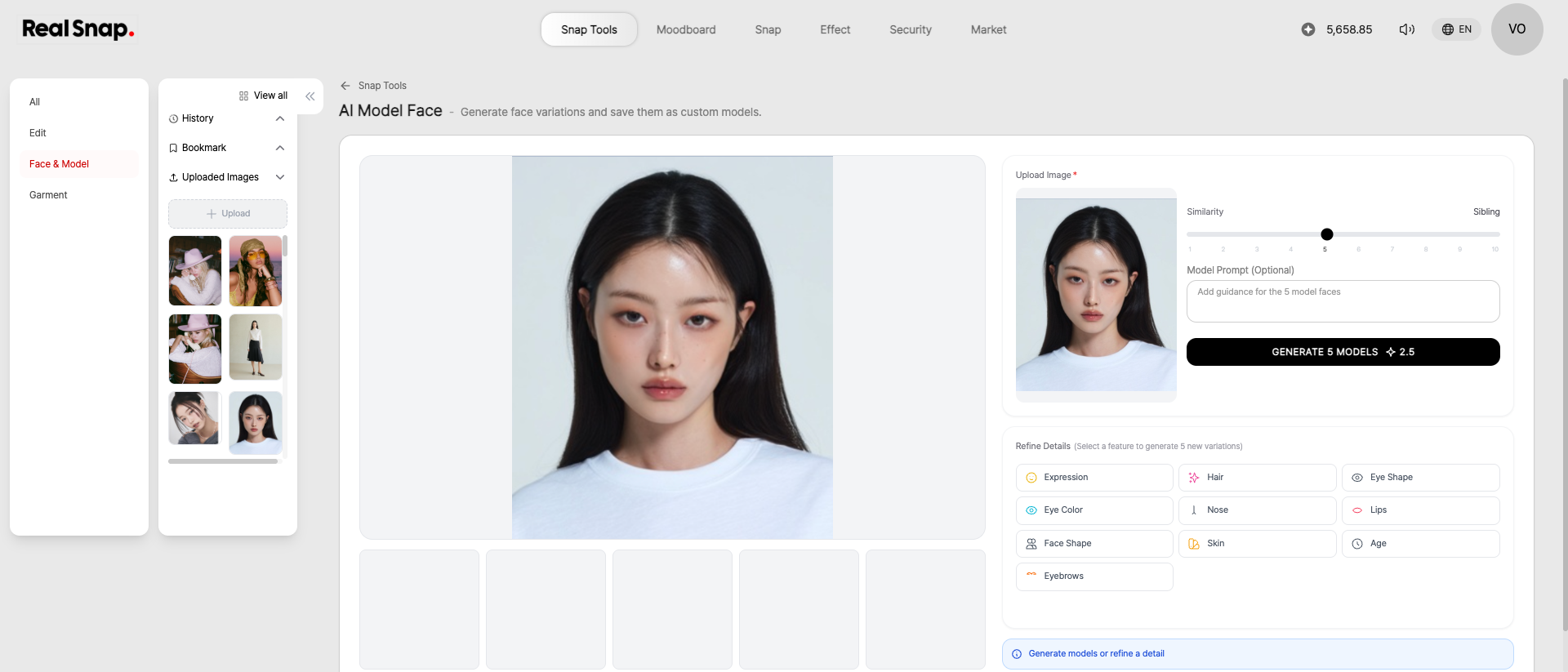
All you do on this screen is upload one face photo and choose the similarity level. Instead of recruiting and comparing multiple model candidates or searching through a pool of stock faces, you start from a single reference face and receive five variations at once.
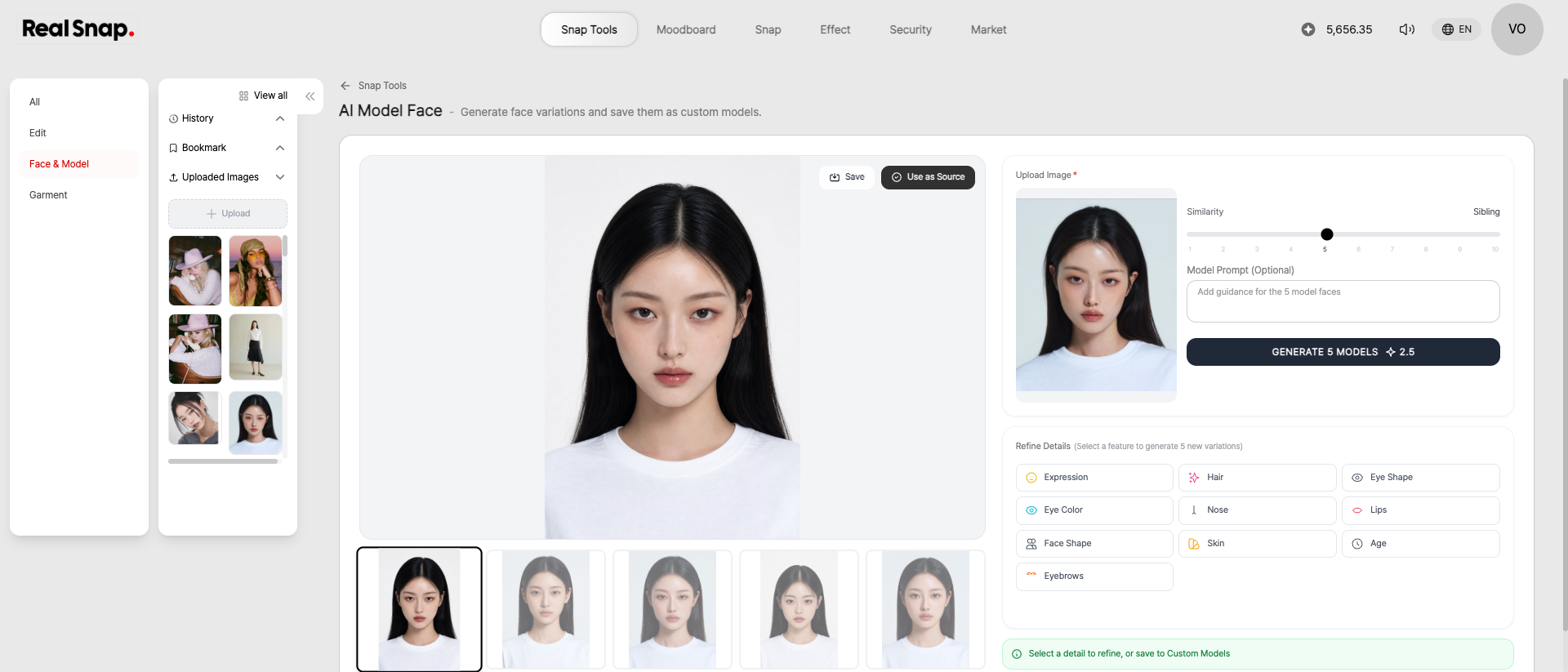
If you choose one of the five faces and save it, you can use the same face as the starting reference when creating the next photoshoot. This reduces the need to choose a new face for every project or ask another team member to confirm which face was used.
RealSnap’s AI Model Face is designed for small teams that find it difficult to book different real models every time, or for brands that want to continue photo shoots with the same face even as seasons change. Upload a single face photo to generate five face candidates, then save one of them to Custom Models and use the same face again in future shoots.