If AI Models Disappear, What Do Fashion Brands Lose?

Model Francesca Pujols has filed a lawsuit against Rainbow USA, alleging that her face was used without consent to create AI fashion editorials. Because most fashion brands rely on a single closed, non-public AI model hosted on servers in the United States for consumer-facing content production, the risk of similar lawsuits extends across the industry.
The risk does not end with lawsuits. There have also been cases in which an AI model that brands depended on, such as Anthropic’s frontier model “Fable 5,” discontinued service without notice. The more a brand has tied its entire production pipeline to one closed model, the more directly it is exposed to legal disputes or geopolitical variables.
H&M is cited as an example of a company that prepared for this risk early. It created “digital twins” by specifying model consent and ownership clauses in contracts, reducing the need to renegotiate publicity rights each time new content is produced. Unlike other brands exposed to the same risk, it reduced the potential for legal disputes from the contract stage.
Source · The Interline, "What If The Models Go Away?"
AI Model Face, an Exclusive Virtual Model That Reduces the Burden of Renegotiating Publicity Rights
RealSnap’s AI Model Face is a feature that creates and saves a brand-exclusive virtual model from a single face photo. Instead of casting a new model every time a brand marketer or lookbook producer creates an editorial, a face created and saved once in Snap Tools can be repeatedly recalled for multiple future editorial projects.
Instead of casting a real person anew each time and negotiating the scope of use each time, saving a single AI model face created from a reference face reduces the need to go through model casting and publicity rights discussions from scratch when creating the next editorial.
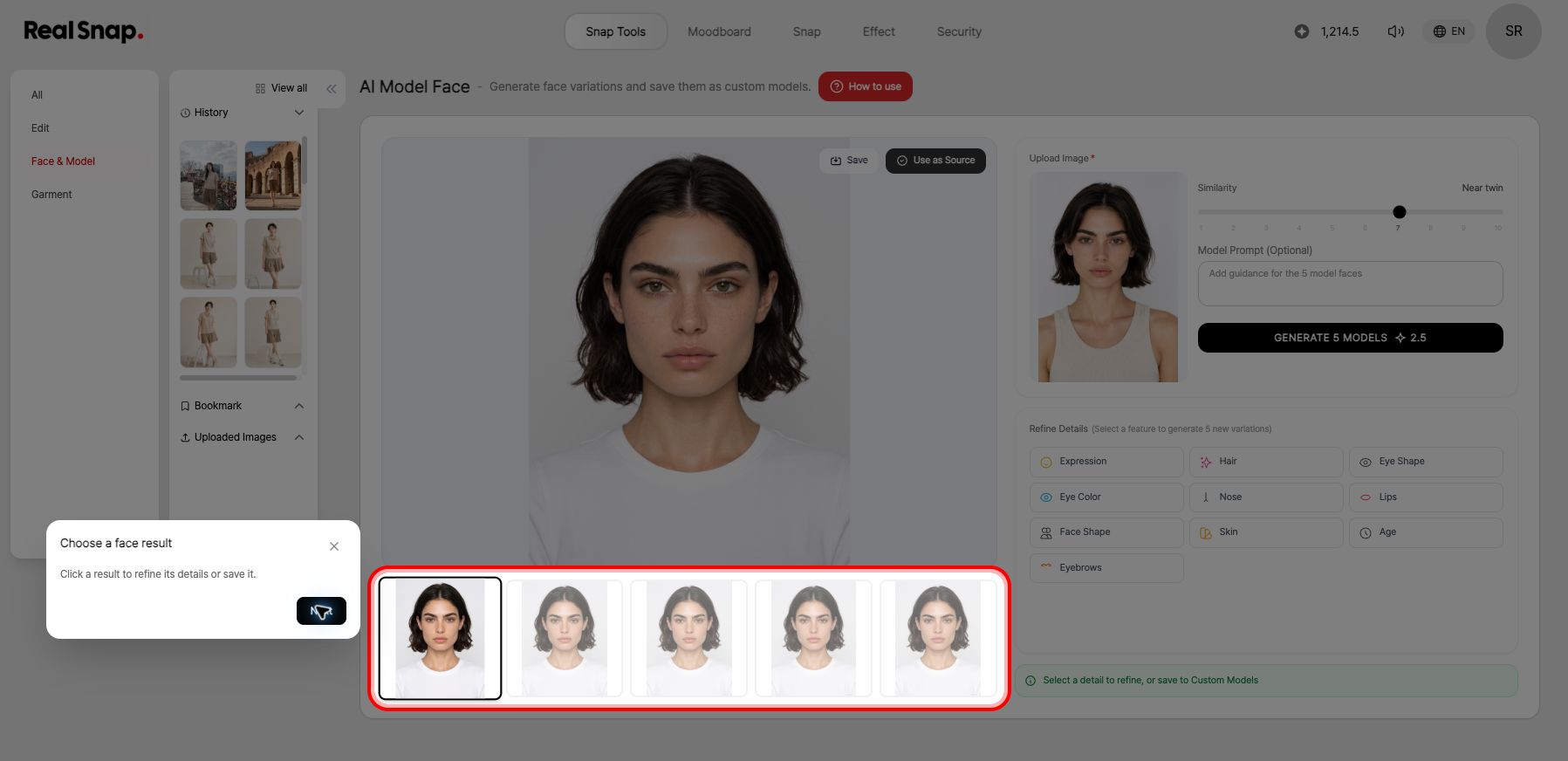
This single screen connects the entire flow, from registering a reference face and setting the similarity level to comparing and selecting the generated face candidates. The selected face can then be fine-tuned in Refine Details by adjusting specific elements such as expression, hair, and eye shape, allowing users to refine and save an already chosen model instead of creating a new face from scratch each time.
Faces saved with RealSnap’s AI Model Face can later be repeatedly recalled as the same model for other editorial shoots, including lookbooks, studio shoots, and location shoots. For brands that need to create multiple editorials each season, or for small teams that find it difficult to hire an exclusive model separately, it may be worth starting the next editorial project with a face created once and saved in advance.