34% of consumers cited "misleading images" as a reason for returns

Retail returns in the United States are projected to reach about $850 billion (roughly 1,200 trillion won) in 2026. Thirty-four percent of consumers cited misleading product images as a reason for returning an item. In other words, shoppers are not sending items back because the images are unattractive, but because what arrived differs from what they saw. This is why product fidelity, meaning how closely the product in an image matches the real item, has become a central issue in adopting AI images.
In an interview for The Interline's AI Report 2026, Photoroom's Matt Rouif defined trust in e-commerce AI images as a question of whether the expectations an image creates match the product that actually arrives. He explained that color accuracy, texture, branding, shape, and consistency across the catalog affect purchase decisions, so commercial success depends on accuracy more than aesthetics. The logic is that a polished presentation may attract clicks, but if it departs from the real product, it only widens the gap between expectation and reality.
He also stressed that trust is measured by outcomes. His criteria can be read as four points: whether the image helps conversion without friction later in the customer journey, whether quality is consistent across a large catalog, whether the return rate improves, and whether the team trusts the system enough to deploy it across the entire catalog. In other words, what gets evaluated is not the finish of a single AI image but whether the same standard holds across the whole catalog. The interview is one of a 17-part series of AI executive interviews.
Source · The Interline, "All About AI: Matt Rouif of Photoroom"
AI images have become routine, but a large share of what is generated is still discarded
In fashion image pipelines, generative AI is no longer an experiment. The Interline podcast notes that its uses have widened, from shoot automation at large retailers to bulk production of PDP (product detail page) content at small brands and campaign image creation. AI images, both labeled and unlabeled, are showing up everywhere. The question has shifted from whether they can be made to whether they can be trusted.
The commercial logic is clear. Unlike 3D or CG, with the right tools a worn-on-model image can be created in minutes. AI has quickly taken hold in the process that leads from samples to buyer-facing images, but the host does not see it as a fully solved problem. GPT Image 2.5, released two weeks before the recording, brought major improvements in multi-turn editing (revising through an ongoing conversation) and consistency, and video generation is also advancing quickly.
Even so, what brands want most right now is not more images but control and precision, which is the authenticity this episode talks about. A considerable share of generated results still falls short of the standard and is discarded. This shows that speed alone cannot meet the standard for commercial imagery. What companies build on top of that accuracy once it is secured varies from one company to the next.
Source · The Interline, "Is There Such A Thing As An Authentic Synthetic Image?"
Clothes Color Match. A review tool that matches the clothing color in a generated shot to the original garment
RealSnap's Clothes Color Match is a snap tool that adjusts the clothing color in a generated shot to the color reference of the original garment image. Even when the shape and mood are right, lighting and the generation process can shift colors subtly, and this tool can be used to check such shots once before publishing.
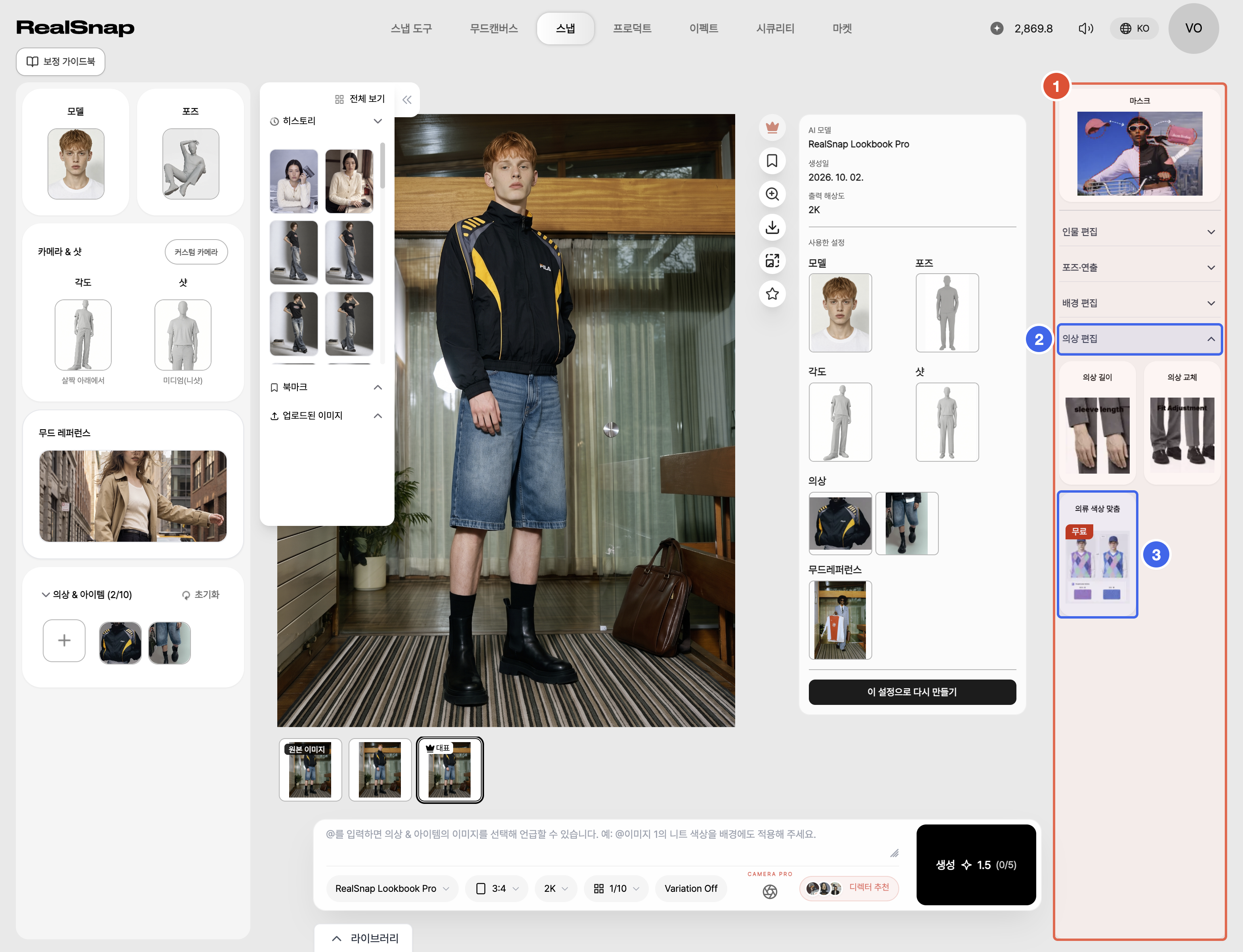
Within the 의상 편집 menu, color correction is separated from the other outfit tools, so you can open it directly.
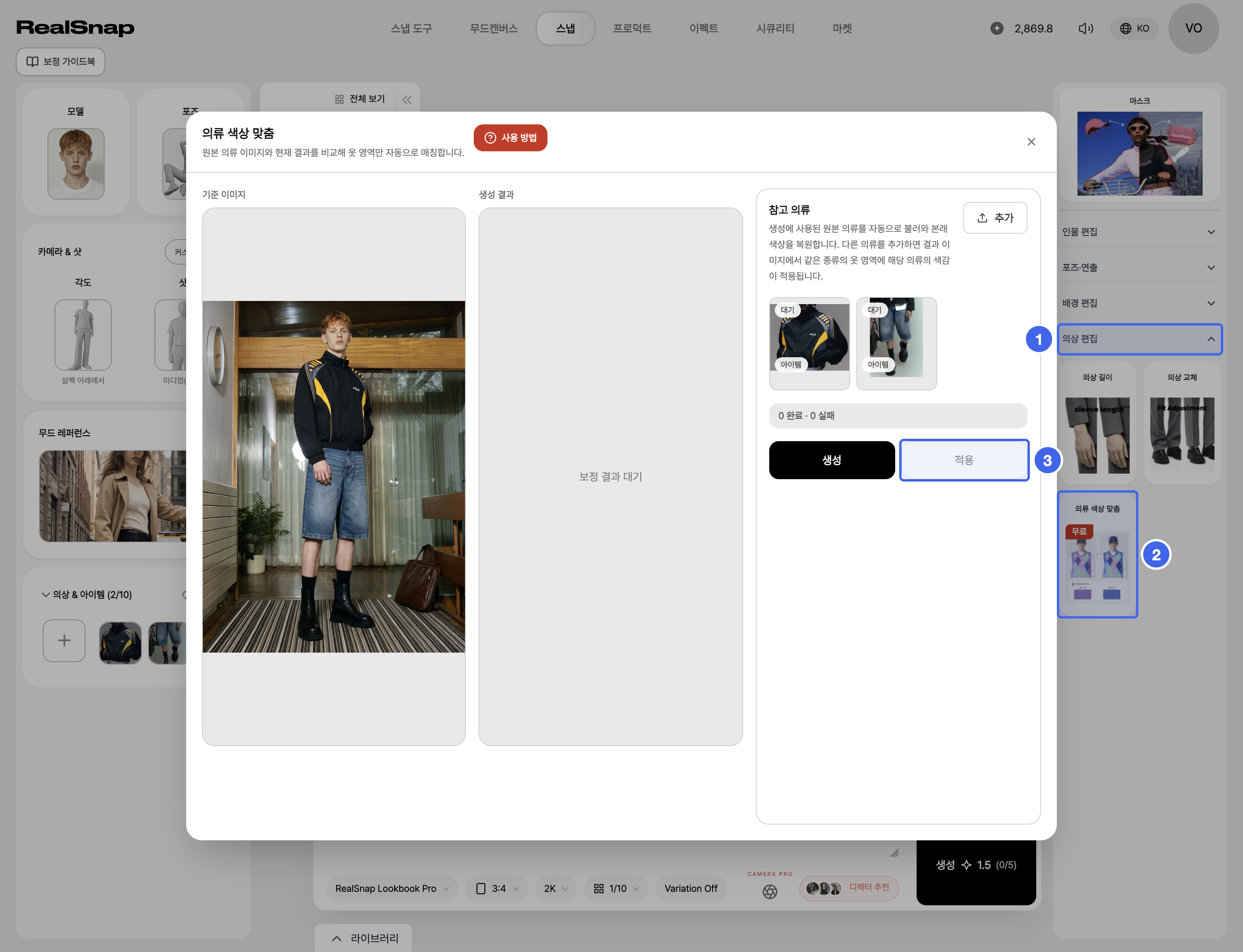
With the reference image on the left and the reference garment on the right side by side, you can check which color the clothing area of the generated result will be matched to.
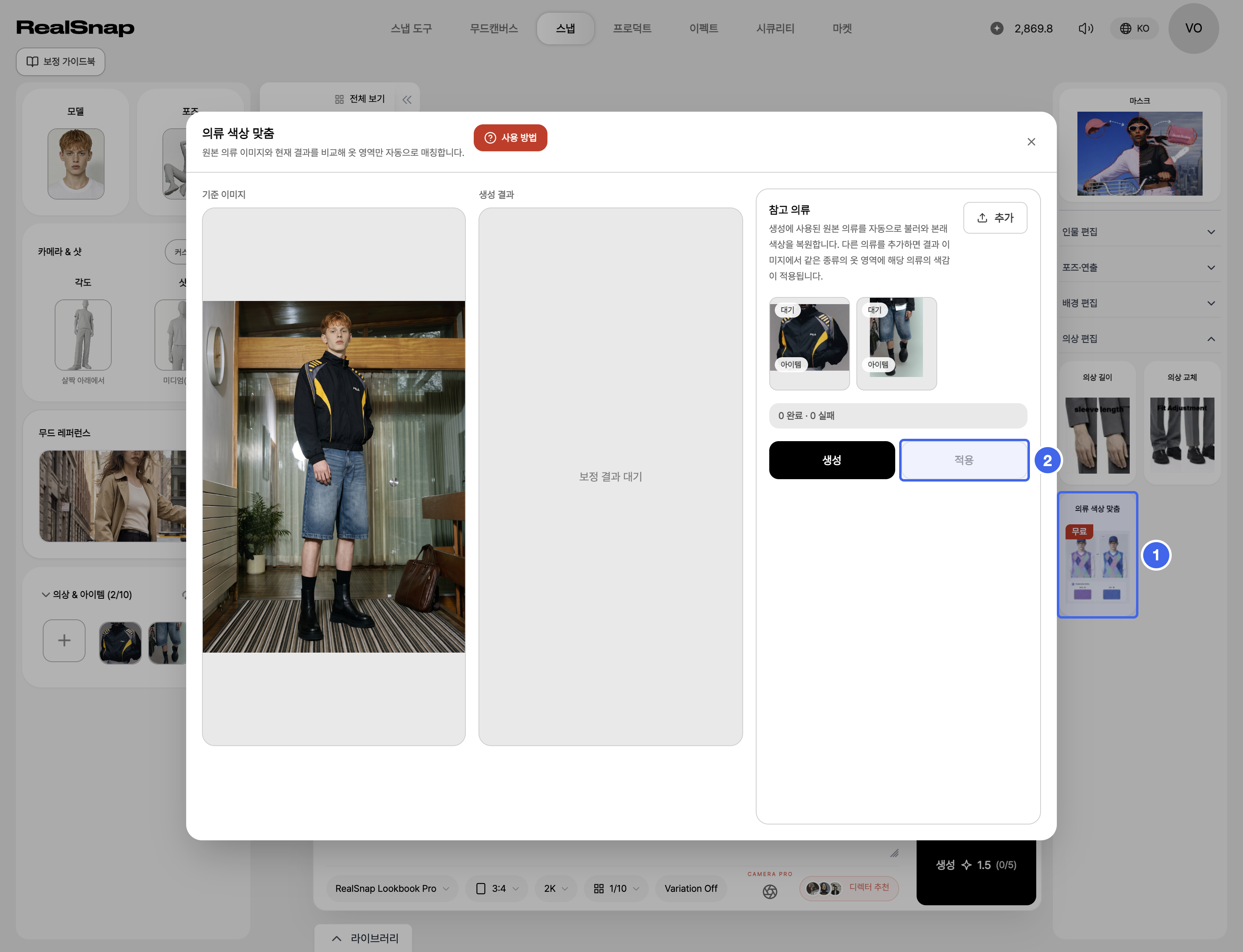
A spot for the correction result is set up next to the reference image, creating a workflow for checking colors by comparing before and after applying.
RealSnap's Clothes Color Match is worth trying as a review step before publishing lookbook or studio shots: pick out images where the clothing color looks off from the actual product, and check them again against the reference color.