A Bicycle With Two Handlebars: An AI-Generated Error

In an Instagram ad image for a Van Rysel bicycle posted by REI, an extra handlebar appeared behind the saddle. The image, created or retouched with AI, also included an impossible background composition, skin tones that seemed to glow on their own, an unnatural bokeh effect, and even a misspelling of the brand name on the frame.
The issue is that this ad did not appear without any review process in place. REI is regarded as a retailer that has carefully managed product imagery through internal rules such as its Product Impact Standards and its marketing diversity and model photography standards. The fact that an image showing a non-existent component was posted by such a company means either the review process itself broke down or the person in charge failed to catch the error.
The damage was not confined to one party. Trust was shaken for Van Rysel, which may not even have known its product had been misrepresented; for REI, which violated the standards it had set for itself; and for consumers who saw a photo of a bicycle that does not actually exist. Some argue that the backlash against AI-generated images is overstated, but separate from that debate, this case shows that the technical quality of generative imagery still has not met the expectations of real-world retail operations.
Source · The Interline, "Piling On The Wrong Bike"
Mask Object Removal: Selectively Erase Unwanted Props in the Image
RealSnap's mask object removal is a tool for cases where an unintended prop or background element remains in a finished image. You simply paint over that area to remove it and naturally fill in the surroundings. It is mainly used by people managing e-commerce detail shots or brand marketers doing a final review of campaign images before publication.
Instead of regenerating the entire image or scheduling another shoot, you can mask only the problem area and compare the result with the original, reducing the back-and-forth of using a separate retouching program. It is especially useful for small teams that find it difficult to arrange another shoot, or for people who notice an awkward element late while reviewing images just before publication.
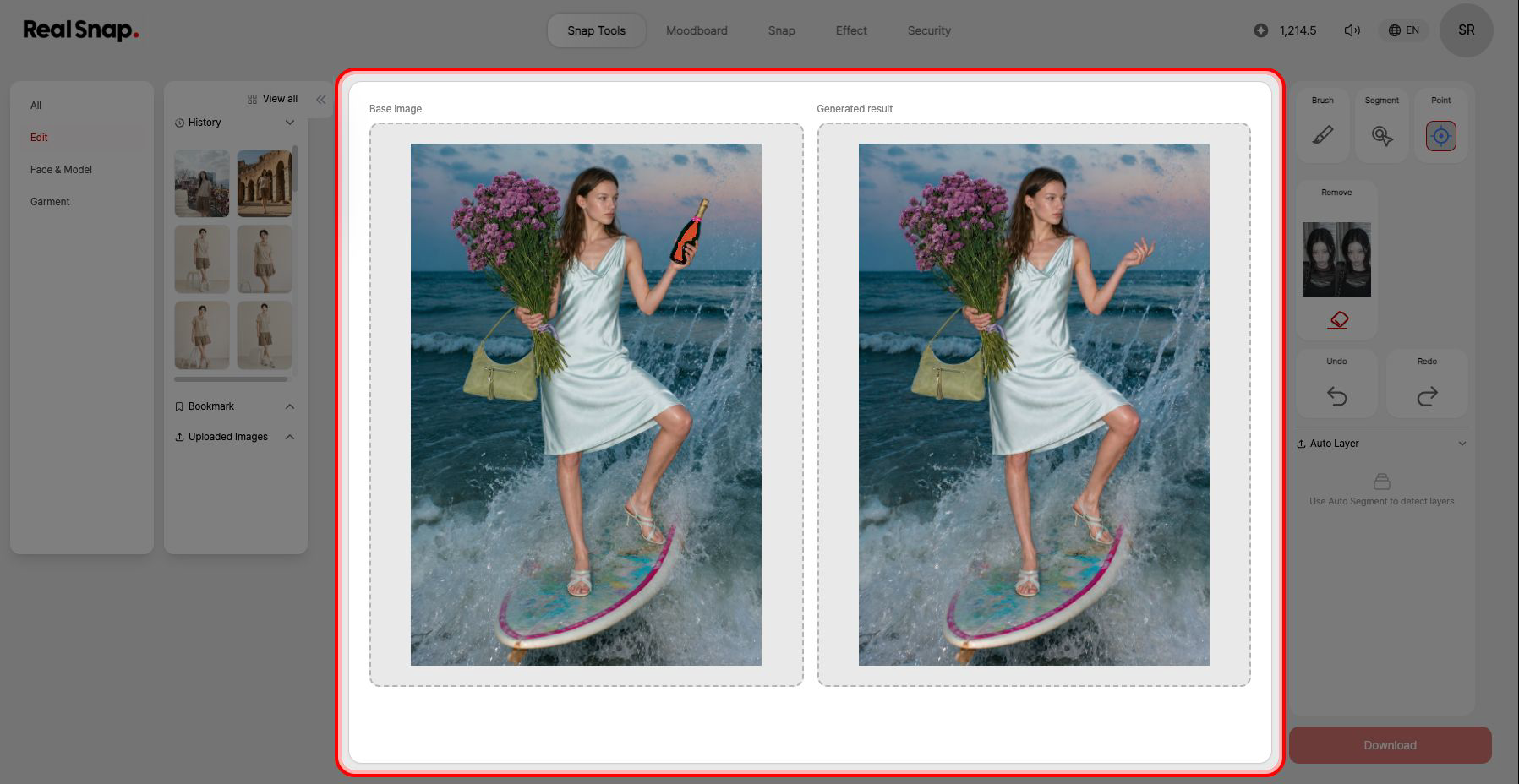
This screen shows the process of removing the masked area and comparing the result with the original side by side. Since you can remove props and check the background restoration result on the same screen without moving to a separate program, it reduces the need to recreate the entire image because of a single object.
With RealSnap's mask object removal, you can erase props or background elements that catch your eye late in a finished editorial image on the spot, without reshooting, and compare the result. For teams responsible for catching these issues in the final check before publication, this tool is worth trying first: mask only the problem area and view the original and result side by side.