OneWeave Cuts Out the Sewing Step

The sequence of first turning yarn into fabric, then cutting and sewing it, is being reversed. Unspun has renamed its 3D weaving platform Vega to OneWeave and expanded the range of materials its technology can shape directly from yarn into three-dimensional form. By arranging thousands of yarns around a core, the method produces seamless shapes, with the core idea being to cut down on the cutting and stitching-together steps that flat fabric otherwise requires.
The efficiency OneWeave is pursuing lies in changing both how items are made and where they are made. With on-demand, local production as the goal, the company is working to strip out sewing-related work at the stage where yarn is formed into three-dimensional shapes. The materials it can be applied to have expanded to canvas and wool-Ecovero blends, with dyeable materials also being added.
This shift is tied to the openness of design tools as well. AdaCAD is free parametric software for weave design that supports research into reproducing complex textile structures repeatedly and scaling them to industrial use. When 3D weaving technology and open-source design tools move forward together, not just how materials are made but how they are designed no longer has to depend solely on the experience of a handful of specialists.
Source · Sourcing Journal, "Material World: New Weaves, New Rules and Textile Futures"
WTRLSS Trims Dyeing Through Finishing

Water isn't the only thing being reduced in denim dyeing. Lab Denim has rebranded as WTRLSS and is expanding the commercialization of its digital dyeing technology. At its core is MultiActiv chemistry, which dyes denim in a single step, cutting down the sequence of dyeing, washing, and finishing that normally follows. The technology's goal is to lower water and energy use along with hazardous chemicals at the same time.
WTRLSS holds all of Lab Denim's patents and intellectual property and is moving into commercial production with brands and manufacturers. It is running a pilot with Bangladesh's Ha-Meem Group, moving the technology out of the lab and onto the actual manufacturing floor rather than keeping it confined to test materials. Its scope isn't limited to denim, either. It can also be used on cellulose-based fabrics and prints, testing how far digital dyeing's applicability can extend.
The technology is also set to be used at advanced manufacturing facilities such as ISAIC. The core of its efficiency isn't in creating new colors, but in cutting out several downstream steps with a single treatment. Brands and manufacturers are being pushed to reconsider not just color choices for their products, but the amount of water, energy, and chemicals dyeing requires as a baseline standard for how they produce.
Source · Sourcing Journal, "From Lab Denim to WTRLSS: The Next Chapter in Digital Dyeing"
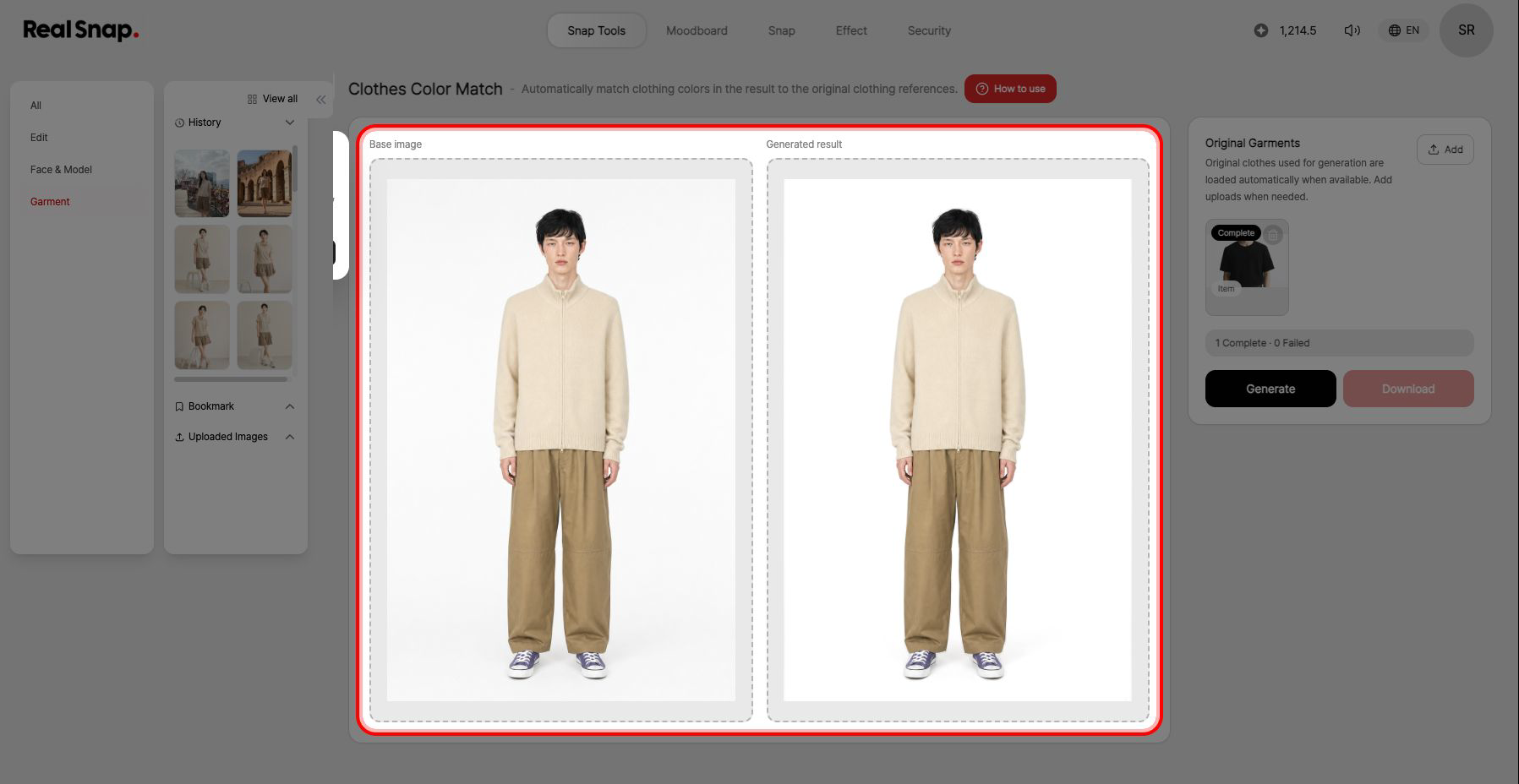
Apparel Color Match: Checking Against the Actual Product Color
RealSnap's Apparel Color Match is a feature for product detail-shot managers or brand marketers to check whether the clothing color in a generated outfit image matches the original garment. When a color looks different from the actual product, correction and before/after checking flow together in one pass, helping cut down on the back-and-forth of color correction and re-checking before publishing.
It's especially suited to users who need to check color-by-color cuts against the same standard, such as those with many color options or small teams.