How Post-Production Became the First Step of a Campaign

Post-production has moved from the final touch-up of a campaign to its starting point. In a contribution to The Interline AI Report 2026, the Studio Private team, which works with Dior, Louis Vuitton, Nike, and Adidas, said that a mature technology toolkit has made post-production central to fashion campaign storytelling. The team points to a change in the very concept of a campaign as the background to this shift. It is a noteworthy account because it comes from the production side of work for major brands.
According to the team, today's campaigns have to deliver stills, film, social content, out-of-home advertising, and retail in-store assets all at once. A single hero image is no longer enough to meet the outputs each channel requires, and so the point at which creative decisions are made has changed as well. Post-production has shifted from a stage that wraps things up after the shoot to a stage that sets direction from the early planning phase.
Studio Private explains that moving post-production earlier brings cost savings and fewer large-scale last-minute revisions. The logic is that setting the standards for look and finish early reduces the need to overturn everything just before delivery. Mature technology and AI drive this shift, but the team said it uses AI to supplement, not replace, professional skills. It explained that AI and hybrid workflows (a way of working that mixes human skills with automated tools) are used to protect professional expertise.
Source · The Interline, "The Technology Behind The Biggest Campaigns"
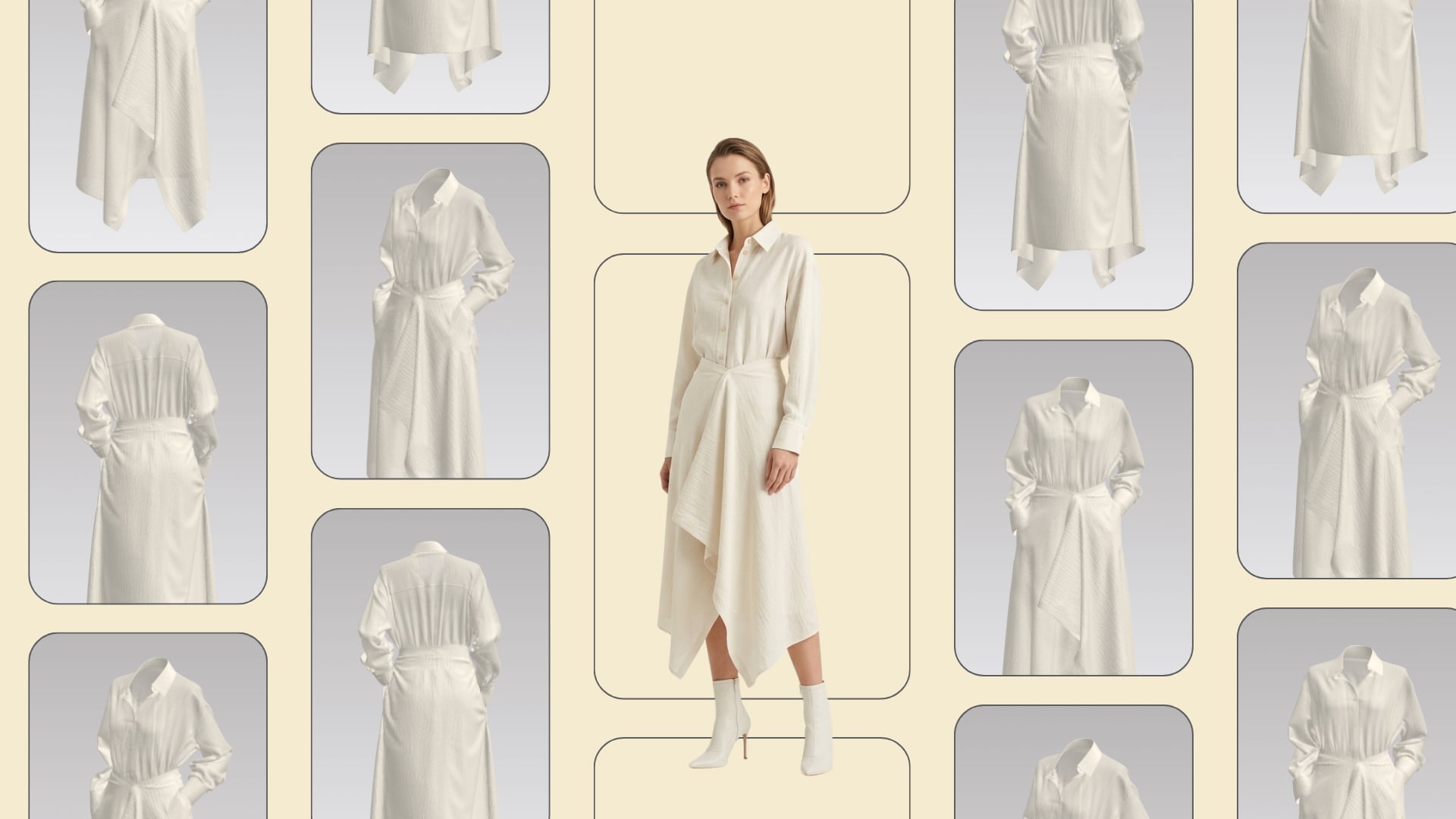
More than 80% of AI initiatives have picked up speed over the past 12 months, yet overall product development speed has not changed much. Drawing on a 2026 industry survey, The Interline and Style3D point to this paradox. They analyze that fashion's 3D and AI investments should be treated as one connected ecosystem, not viewed separately, if time to market is to actually shrink. Investment has grown while the schedule has stayed the same, and that is the starting point of the piece.
In the survey, about 70% of industry professionals expected AI spending to increase next year. Large investments have also continued for years in 3D digital product creation (DPC, a method of developing products with 3D virtual samples instead of physical samples). 3D has delivered value in product visualization and the stages after it, while AI is expected to bring large returns in early and late stages such as analysis and visual content.
The problem lies in the middle of the product journey. Technical design, sourcing, and production remain areas that both technologies have left relatively untouched. As a result, even though ideas can now be generated in minutes and precise digital products can be built, the time to bring a new product to market is the same as before DPC adoption. In other words, the diagnosis is that the speed bottleneck lies not in the early and late stages AI has reached, but in the middle stretch that remains untouched. The piece examines whether connecting the two technologies can meaningfully shorten time to market and move closer to the new promise of physical AI.
Source · The Interline, "Realigning 3D And AI With Speed To Market"
RealSnap's Camera Angle is a snap tool that rotates the viewing perspective of a cut you have already made, turning the same outfit into versions from different angles. If you pull variations such as front, side, and back from a single main cut, you can use them as a starting point for adding assets when each channel needs a different visual.
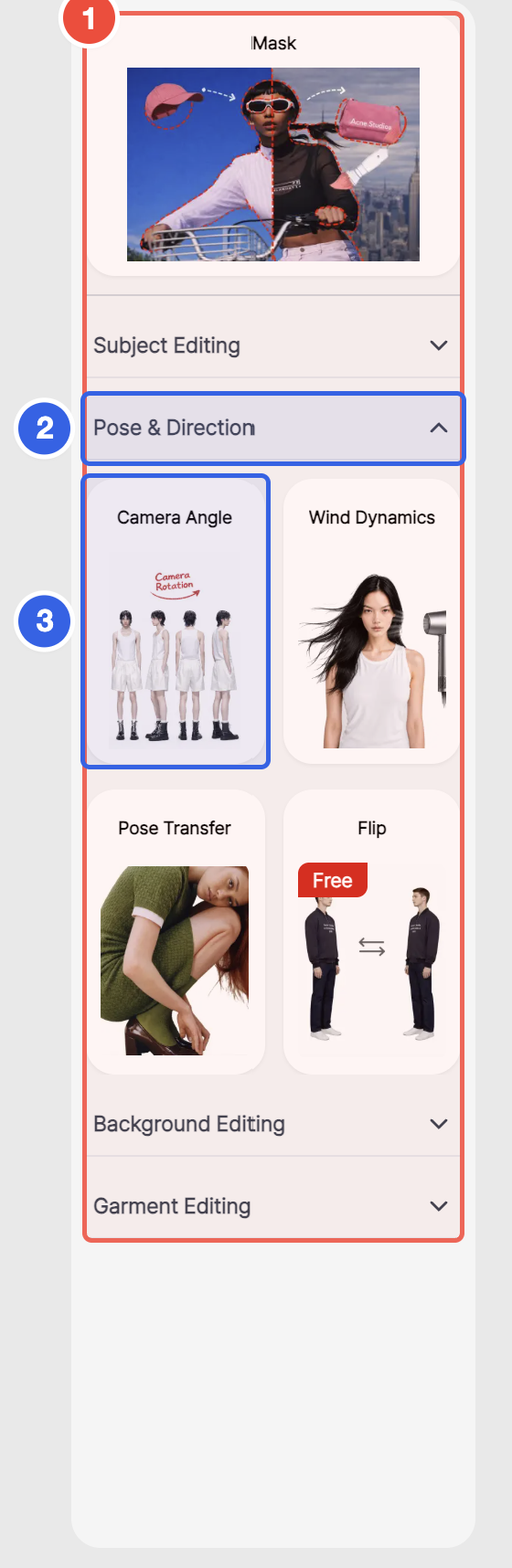
Inside the Snap tool, it sits in the 포즈·연출 group, so you can pick it right alongside other retouching tools.
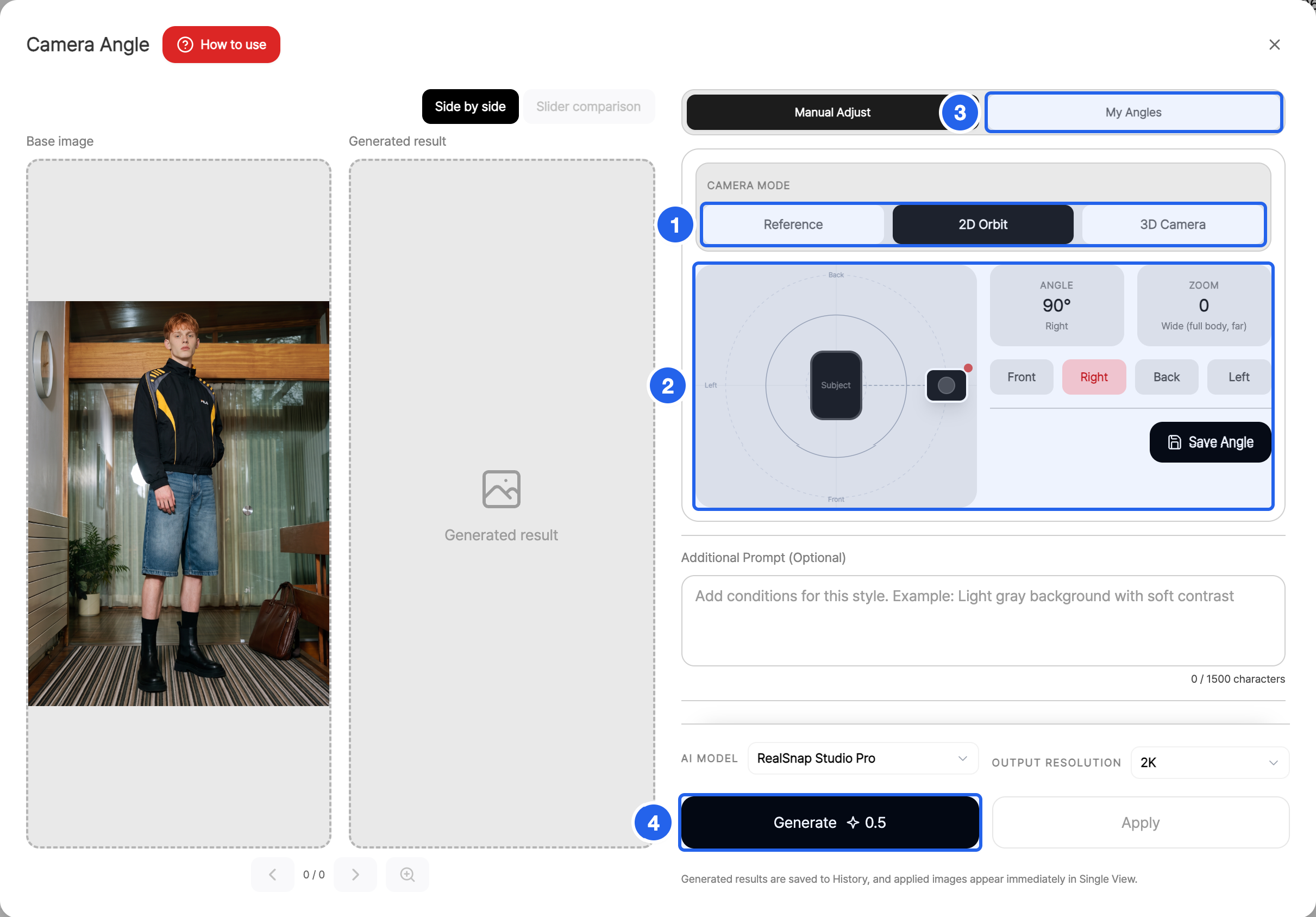
You set the angle with the original cut and the generated result side by side, and by loading a saved angle you can apply the same viewpoint repeatedly across multiple cuts.
With RealSnap's Camera Angle, try splitting one main cut into front, side, and back versions, then apply the saved angles to other cuts to create asset candidates for each channel.