A24's $75 Million Isn't a Tool

Film studio A24 entered a research collaboration with Google's DeepMind on filmmaking workflows as part of a $75 million investment from Google. The key point is that this is not a deal handing over a content library or intellectual property to train AI models, but a research partnership in which creators help decide how and where the technology gets used. It marks a case where the terms of AI adoption shift from cost-cutting or production automation toward creative control.
The areas A24 is targeting first are early-stage creative work before principal photography begins, such as storyboarding, ideation, and previsualization. In this context, AI functions less as a substitute churning out finished output at scale, and more as a customized tool that lets directors and producers test scenes and widen their options. The same question remains for fashion brands: will they simply rush to adopt generic generative tools, or will they co-develop tools that reflect their own aesthetics and sensibility with technology partners, securing creative control and cultural influence? The judgment of the person using the technology becomes as important as the efficiency of the output.
Source · Vogue Business, "A24’s AI Bet Is a Lesson in Creative Influence for Fashion"
Images Abound, Meaning Has Shrunk

The faster generative AI produces logos, campaign visuals, and product photography, the less scarce a beautiful image itself becomes. Executable drafts have grown abundant, but brand recognition, trust, lasting memory, and emotional resonance have instead become resources for differentiation. The efficiency luxury brands now need to manage is no longer just about making more images faster. It lies in identifying what emotions consumers want to feel and what they want fulfilled, then building that meaning through repeatable brand codes and offline experience.
Emerging brands should start not by imitating visual codes that have already succeeded in the market, but from the emotions consumers want and the cultural needs that remain unmet. This is also where the approach of Hermès and Louis Vuitton lies. Both brands repeat their archives and distinctive codes while reinterpreting them anew each time, building accumulated context rather than simply replicable images. As AI levels the playing field for output, brand differentiation comes not from production speed but from what a brand keeps making people remember.
Source · Vogue Business, "How Brands Can Create Meaning in the Age of AI"
A Moodboard That Connects References to Drafts
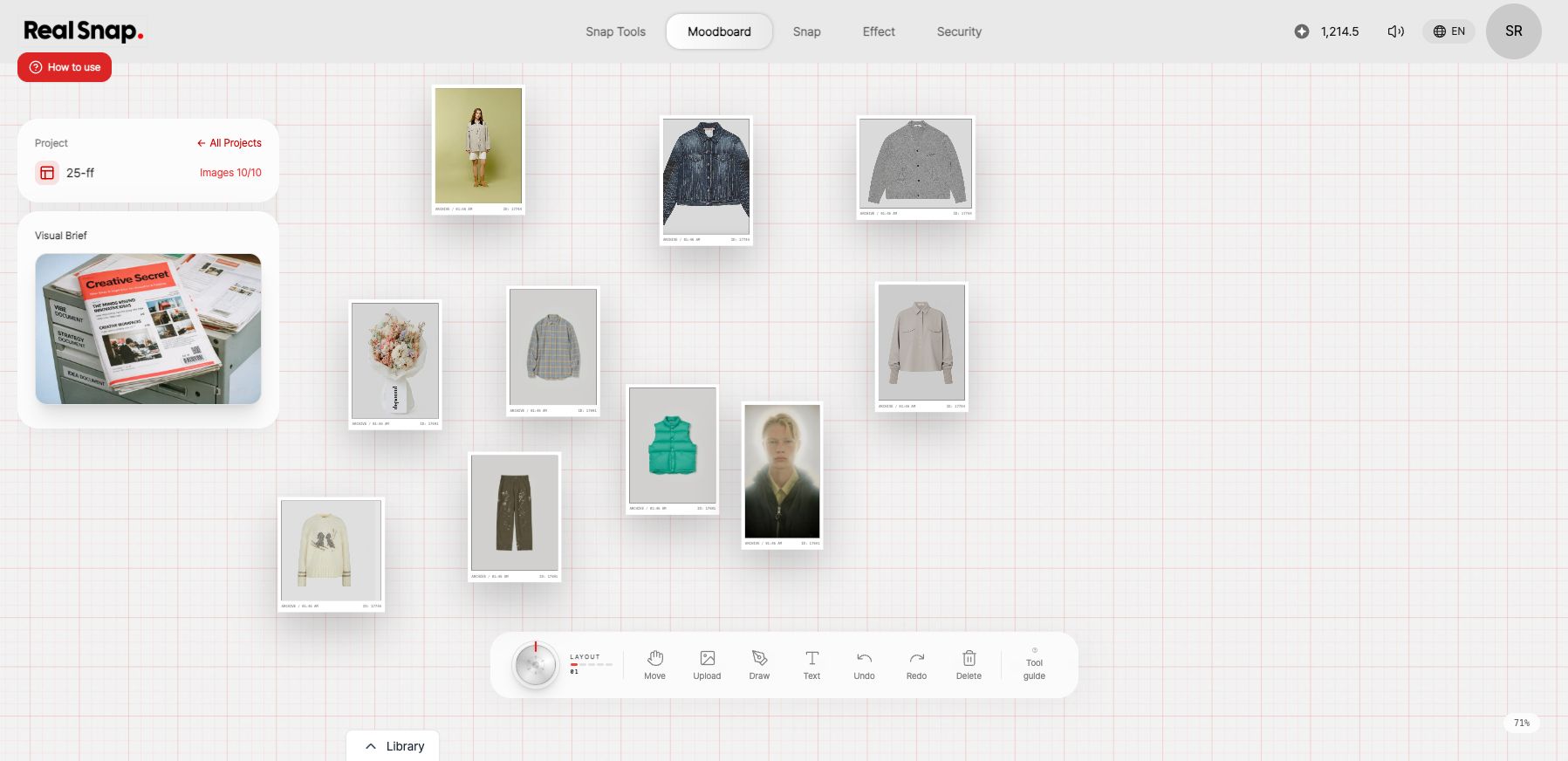
RealSnap's moodboard is a feature that lets brand marketers and lookbook designers gather references and text for a season's concept onto a single canvas to organize visual direction. It reduces the work of collecting scattered materials and re-explaining them in separate documents, cutting down the back-and-forth between early planning and drafts.
It is useful not just for increasing the number of images, but at the stage of deciding what should be repeated and remembered. Since the direction organized on the board can be carried into the next generation task, it works well as a reference point for teams with frequent pre-shoot concept meetings or many seasonal variations.