Ghost Mannequin, Now Achievable With a Single Phone Photo Instead of a Studio
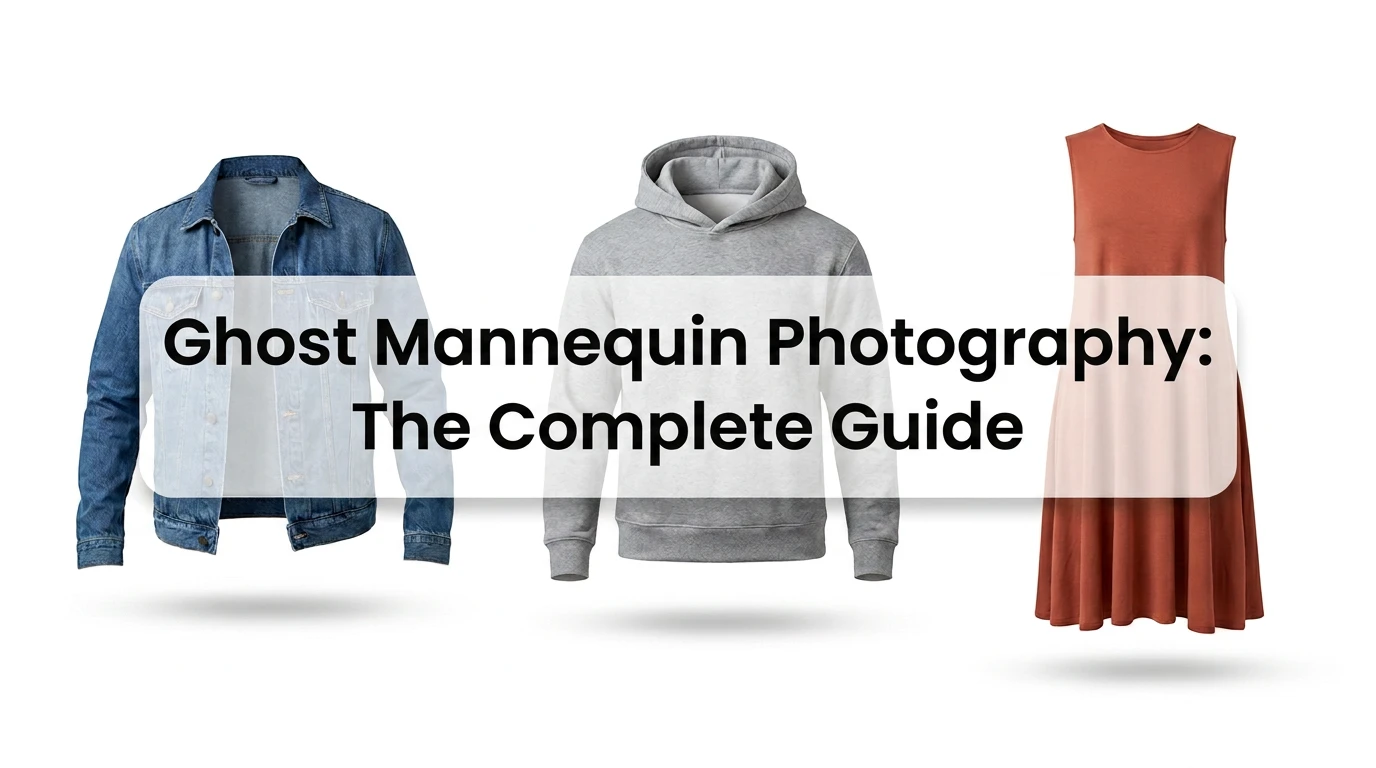
Ghost mannequin is a product photography technique that removes the person or mannequin while keeping the three-dimensional look of a garment being worn, then recomposites the neck area so the inner collar and label show through. FASHN AI recently outlined in a guide the background behind this technique becoming a standard in online retail. According to the explanation, once Amazon's clothing style guide banned mannequin exposure in main images for adult apparel and required model-worn or flat-lay shots instead, ghost mannequin became fixed as the standard shooting method for standalone product add-on shots and in-house catalogs.
The traditional production process involves fixing the camera and lighting, dressing the mannequin to shoot main, inner, and detail shots, then in Photoshop erasing the mannequin, redrawing the neck seam, adding shadows, and restoring the label through a multi-step compositing process. FASHN AI defined this entire process as one that costs both time and money, explaining that it requires going through multiple stages from equipment setup to final retouching before completion.
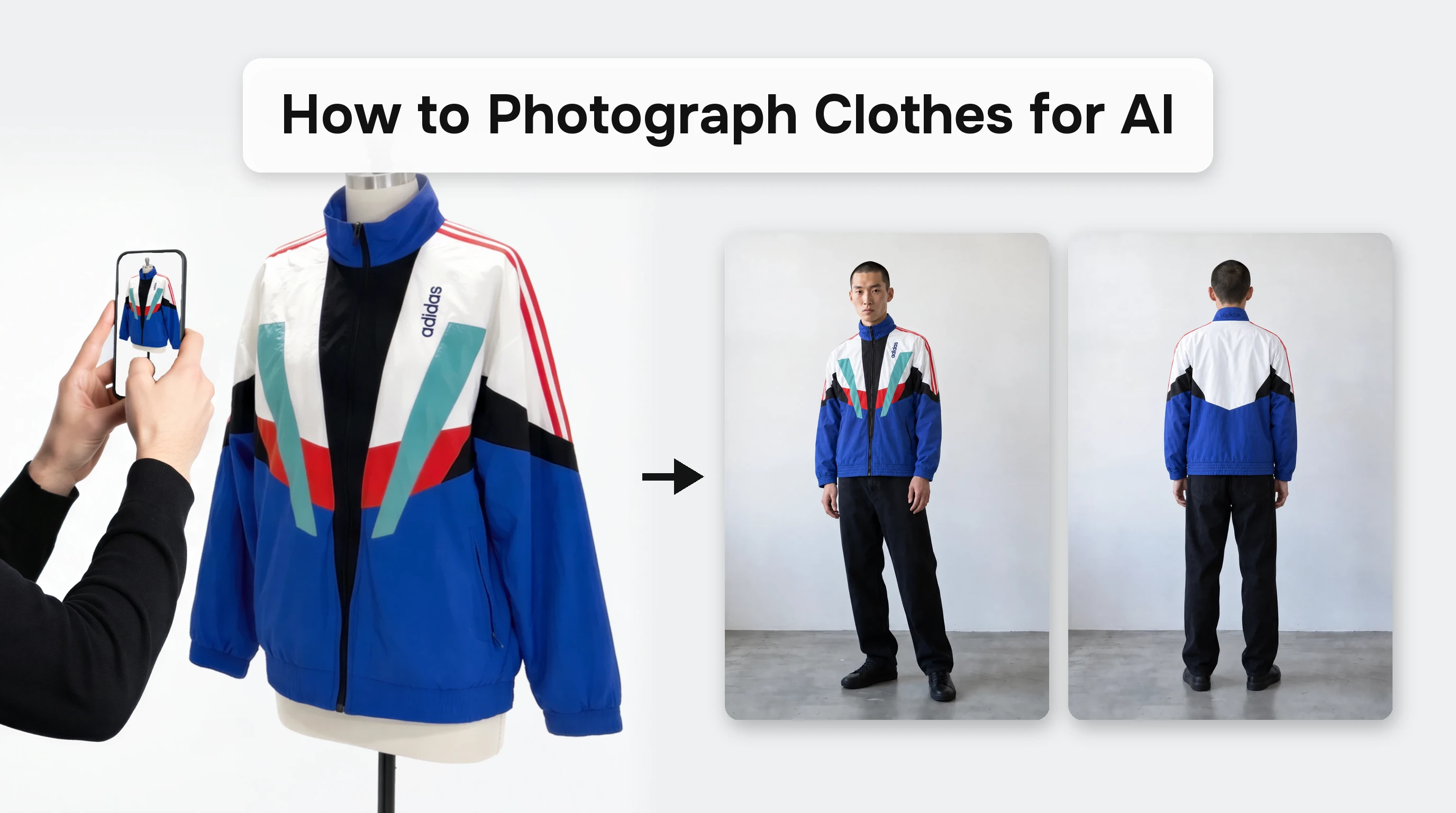
The 'AI method' the guide contrasts this with produces the same effect with a single phone photo and no studio shoot. It presents a photo of the garment laid flat as the recommended source, and also covers a method of removing the person from a worn-garment photo. However, it notes that the original mannequin shot is sometimes better, and adds that this method is expanding beyond ghost mannequin into other product photography as well.
Source · FASHN AI, "Ghost Mannequin Photography: The Complete Guide (Studio, Photoshop, and AI)"
Copenhagen's 20th Anniversary Runway Verified Against European Consumption Data

At the SS27 (Spring/Summer 2027) show marking Copenhagen Fashion Week's 20th season, AI trend forecasting firm Heuritech identified five runway trends: print maximalism, blue tones, fringe detailing, capri pants, and flowing, voluminous silhouettes. Heuritech once again cross-referenced these trends against its own AI-based European consumer demand forecasting data to assess whether the runway trends would translate into actual purchases.
The most prominent trend was print maximalism. Designers layered the same prints at different scales, emphasizing large polka dots and check patterns, while blue tones, fringe detailing, and capri pants also stood out side by side. Heuritech stated that for these three elements, European womenswear consumption potential for April-June 2027 is forecast to show strong growth compared to the same period in 2026. The lightweight dresses and flexible fabrics of flowing silhouettes were analyzed as a continuation of a direction that has carried through from SS26 into SS27.
Heuritech noted that Copenhagen, while not part of the traditional 'Big Four fashion weeks' (New York, London, Milan, Paris), continues to grow in its influence on global fashion. The city, once known as the home of Scandinavian minimalism, is expanding its identity through what is being called 'Copenhagen maximalism' — a mix of bold colors, clashing prints, and playful proportions.
Source · Heuritech, "Top Trends from Copenhagen Fashion Week SS27"
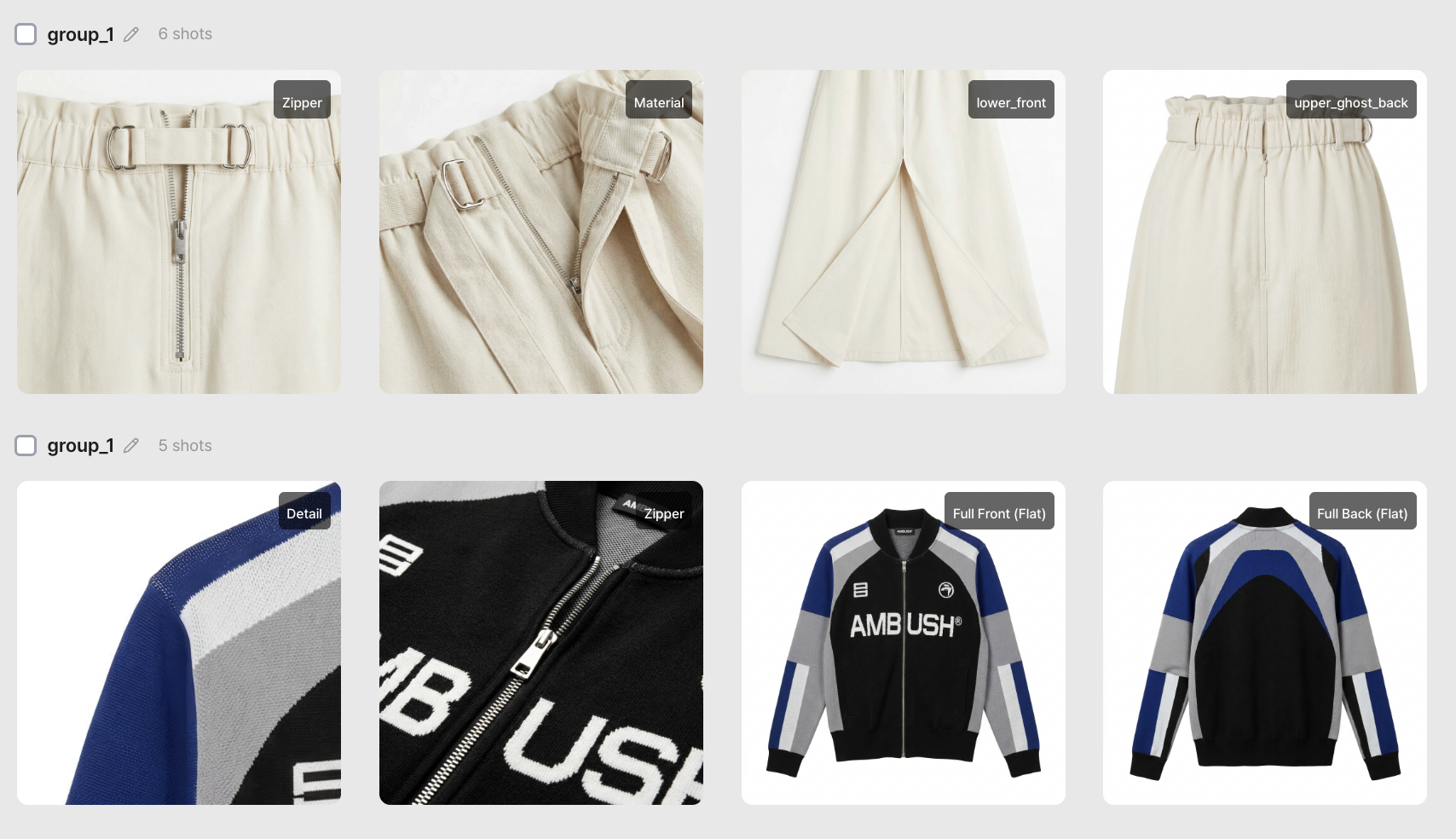
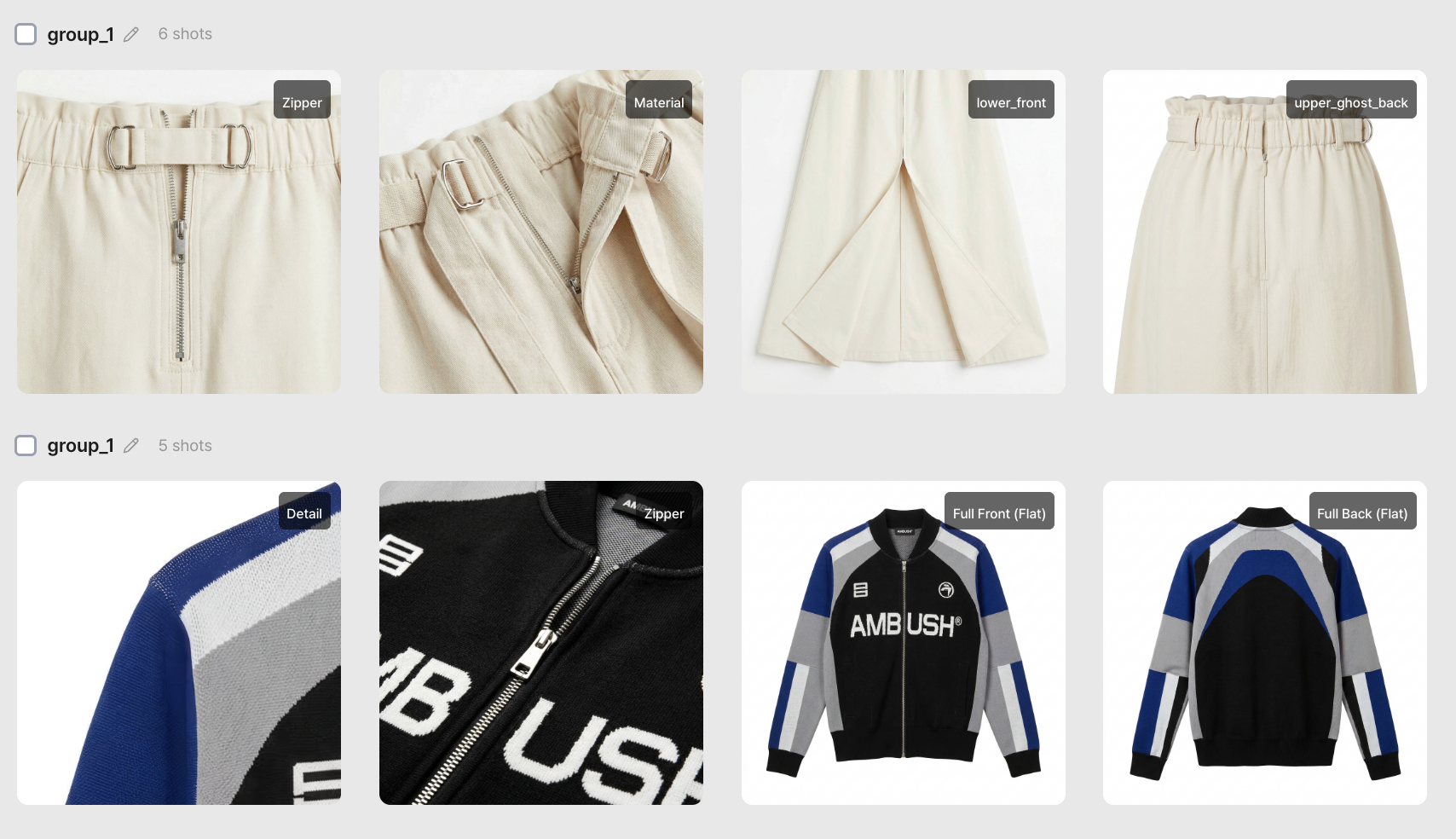
Automatic product shot generation organizes several product photos into one set, from front shots to detail close-ups
RealEdit's automatic product shot generation is a feature that, when you upload a few product photos, puts together a full set including full front and back shots, close-ups of the fabric, and detail close-ups of items like zippers and pockets. Even when multiple products are uploaded at once, they are processed in separate groups by product, making this suited to anyone preparing detail-page images for several new items at the same time.