The AI used daily still stalls at the moment of decision

About 9 in 10 fashion professionals use AI every day, but only about 1 in 4 say they would let AI output drive an important decision. This inverse relationship between usage and trust is not simple caution. Roughly 3 in 5 respondents worry that inaccurate or incomplete information, so-called hallucinations, could justify the wrong choice.
That distrust does not stop people from using AI; instead it keeps them from connecting it to core enterprise systems. About two-thirds of respondents brought personal models and tools from home or their own workplace habits into their jobs, and roughly a quarter did so without permission. As companies lose track of who is using which tool for what, usage and cost slip out of view.
Purchasing methods are also scattered across monthly subscriptions, annual licenses, and usage-based billing, and when project goals are set broadly around productivity or efficiency, the baseline for comparing return on investment weakens further. As a result, AI stays on the periphery of enterprise technology systems rather than moving into areas like product development and engineering, where outcomes carry more accountability. What this structure needs is not simply adding up adoption numbers, but building verification pathways tied to company data and operating standards that measure cost and performance together.

Source · The Interline, "Arm’s Length AI"
Image generation got faster, but legal review still lags

As AI image generation speeds up in fashion, confirming whose rights and data the image passed through becomes more important. The issue extends beyond fair use and disclosure obligations. Model likeness and contracts, US and EU regulations, the provenance of training data, and personal data collection are all entangled at once.
Fashion's exposure is especially wide. The industry produces vast amounts of visual content, so demand for generative imagery is high, but it also carries a history of high return rates, exclusionary casting, and products that don't match a brand's actual promises. If a generated scene misrepresents what a real product looks like or the diversity of the models shown, the gain in production efficiency can come at the cost of larger disclosure and likeness-rights problems.
Personalization services add the same burden. Understanding customers better requires collecting broader and more varied data, which in turn expands the scope of what must be explained and controlled about where personal data is collected and how it is used. So the efficiency of AI adoption is hard to calculate from generation speed alone. Only by including a screening process upfront, one that determines which images can be published, whether model and data rights have been confirmed, and whether US and EU regulations are met, can the real operating costs and risks be seen.
Source · The Interline, "The Legal Frontiers Of AI In Fashion"
Clearance that gauges similarity risk before publishing
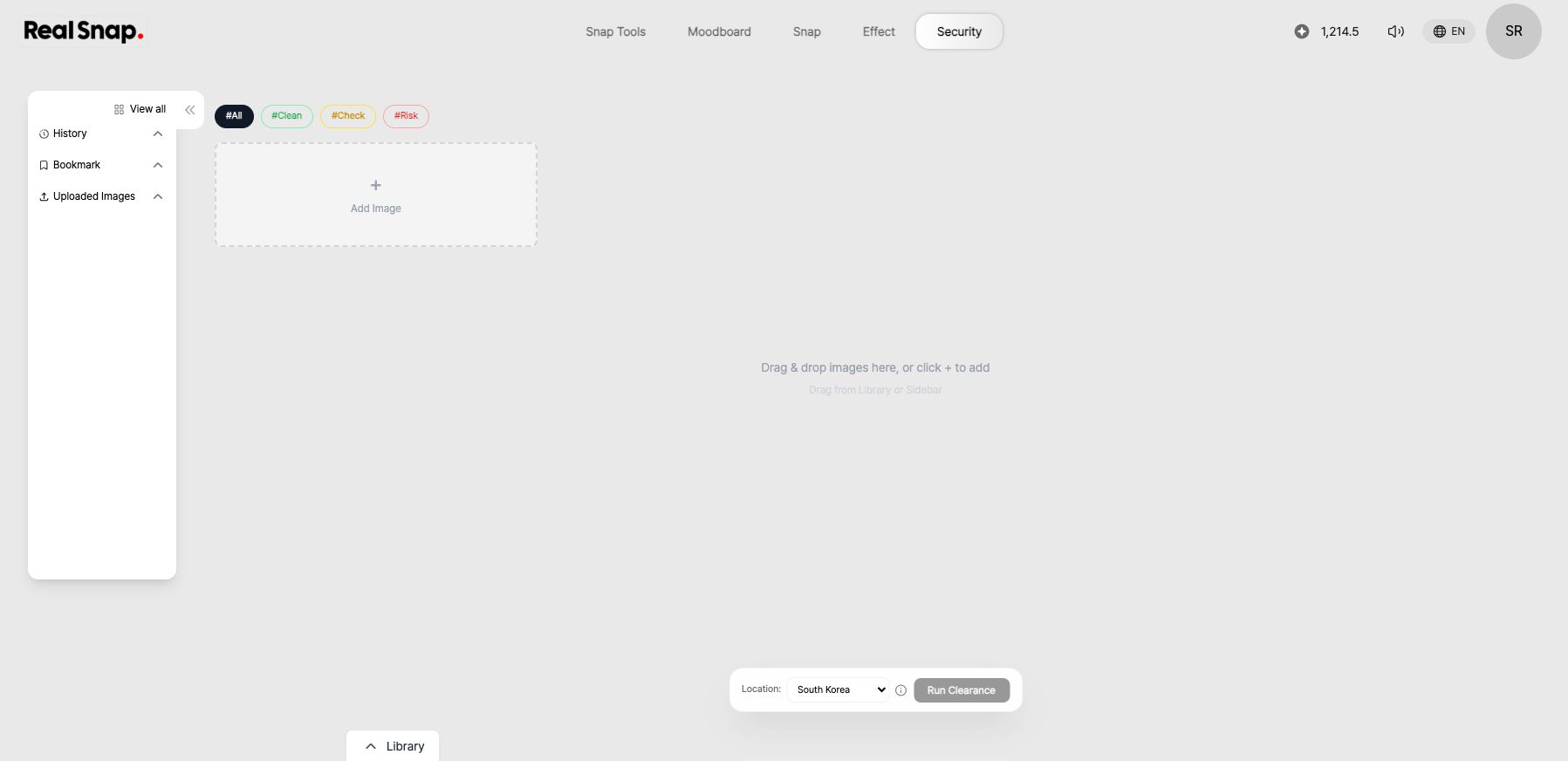
RealSnap's Clearance is a supporting review feature that lets brand marketers and commerce detail-page managers check similarity risk before publishing AI images. It uses reverse image search and AI analysis to surface risk signals, focusing on reducing the effort of separately searching for and reviewing similar images. It does not provide legal judgment or a guarantee of non-infringement.
It is especially useful for small brands with many externally published images, or teams reviewing multiple seasonal drafts, in organizing a pre-publication check process.