Why ROI-focused founder Amelia Tombs put the brakes on AI
At a moment when being "AI native" is treated as a default condition for startups, the two co-founders of sustainable bra brand under+beneath instead chose to pause. Amelia Tombs, who oversees operations, ROI, efficiency, and structure, and co-founder Chloe Grant discussed early on in the company's life how far to bring generative AI in, and how. The result came from weighing efficiency gains against environmental and ethical costs together, and deciding which tasks to hand to AI and which to keep human-centered.
Behind this conversation lies broader tension across the industry. As fashion, long dependent on fast-fashion-style overproduction and overconsumption, moves quickly toward agentic decision-making, where AI judges for itself and carries out tasks, the question of the planetary, human, and ethical cost of a single prompt is easy to push aside. Industry surveys have confirmed both the pressure to adopt AI and the hesitation that this question raises, occurring at the same time.
The report containing this discussion includes profiles and interviews with 17 AI companies, perspectives from 12 industry figures, and results from a survey of roughly 100 respondents. The under+beneath case is one example among them, showing that the question being revisited, regardless of brand size, is less whether to adopt AI than which tasks to hand over to it.
Source · The Interline, "Calculating The Cost Of A Prompt"
What Figma and Canva did for 2D — can it work for 3D fashion design too?

It would seem that as generative image AI spreads, the need for precise 3D engineering would shrink, but the opposite is happening. A podcast host who has long followed 3D graphics observed that the rise of generative image AI has, if anything, brought renewed importance to precise technical engineering and simulation.
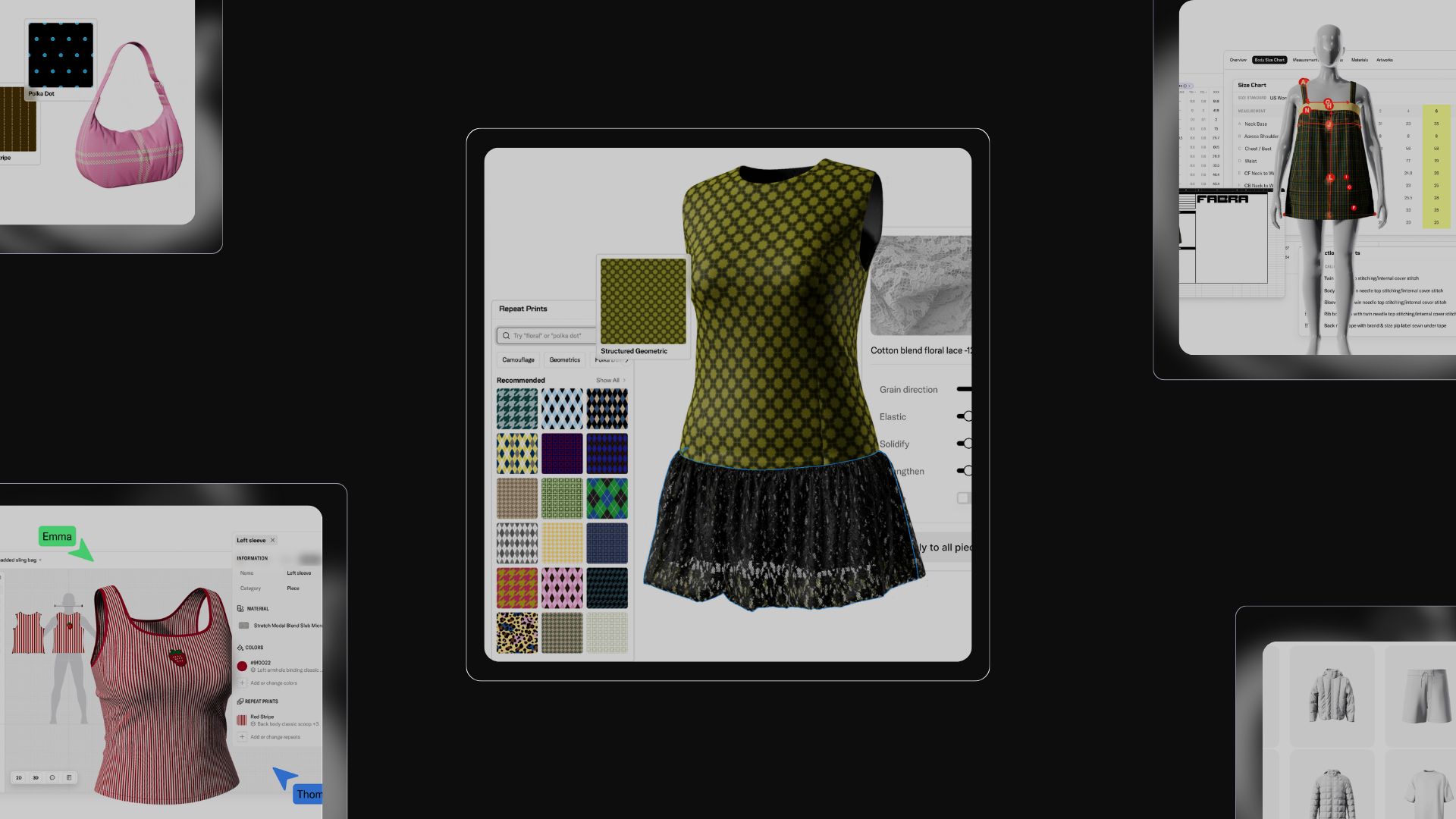
Digital product creation (DPC) in fashion, the work of designing and simulating garments in 3D before they are actually made, has remained the domain of a small group of specialists reliant on expensive local hardware and complex software. Even "3D scaling" has tended to mean repurposing 3D renders or objects that already exist for other uses, rather than growing the pool of people who work in 3D. By contrast, 2D design fields such as web design, graphic design, and DTP were, a decade ago, also confined to the desktops of a small group of specialists, until "multiplayer" web-based collaboration tools like Figma and Canva changed that.
Recent advances in 3D scanning technology have made it easy to display 3D objects on the web, fueling growing interest in bringing 3D design and simulation of clothing and accessories into the browser. Still, whether the "multiplayer" collaboration model that drove 2D design onto the web can work just as well for 3D fashion production, where precision is essential, remains an open question.
Source · The Interline, "Will The Web-Native Playbook Work For Digital Product Creation?"
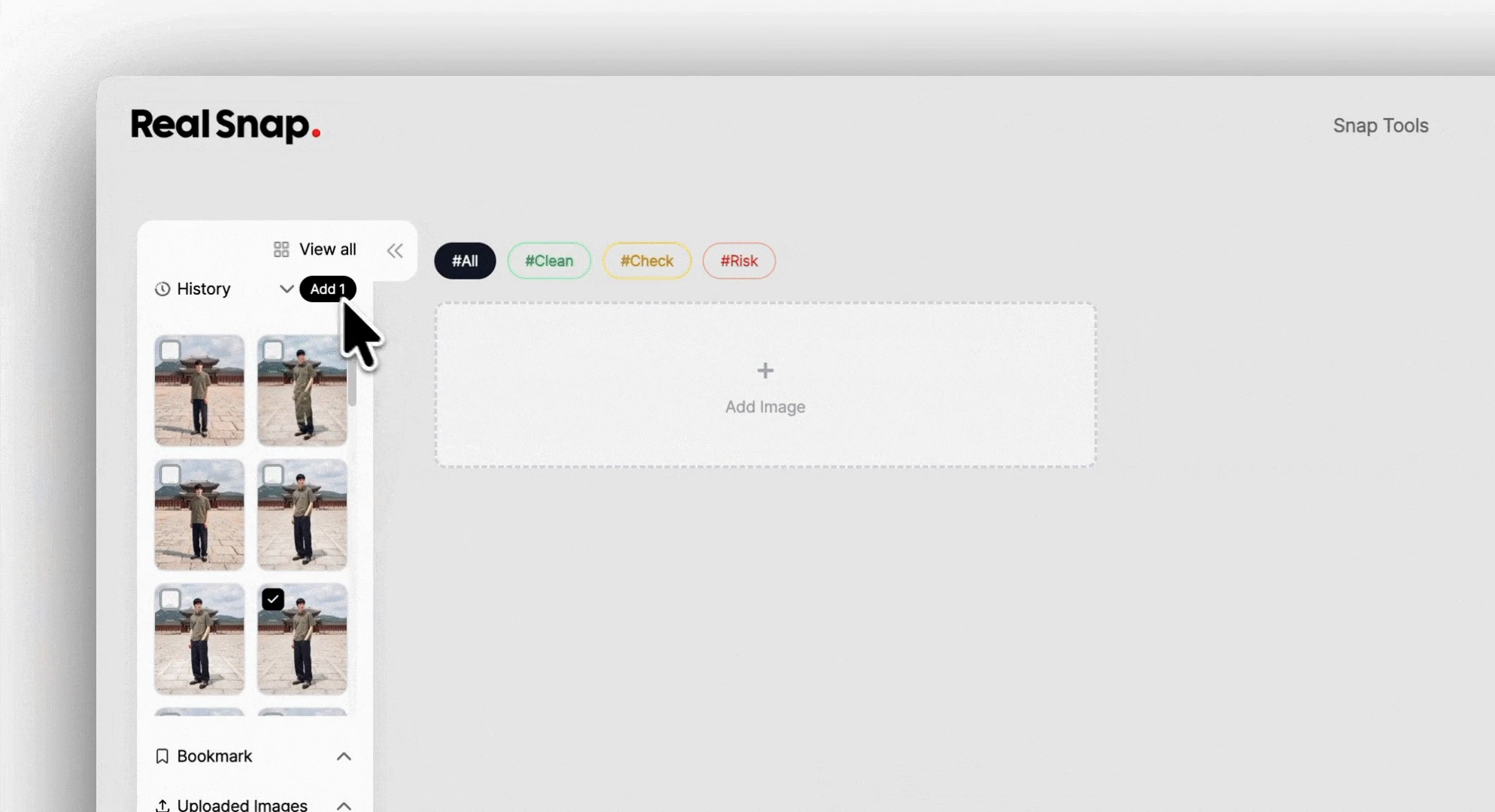
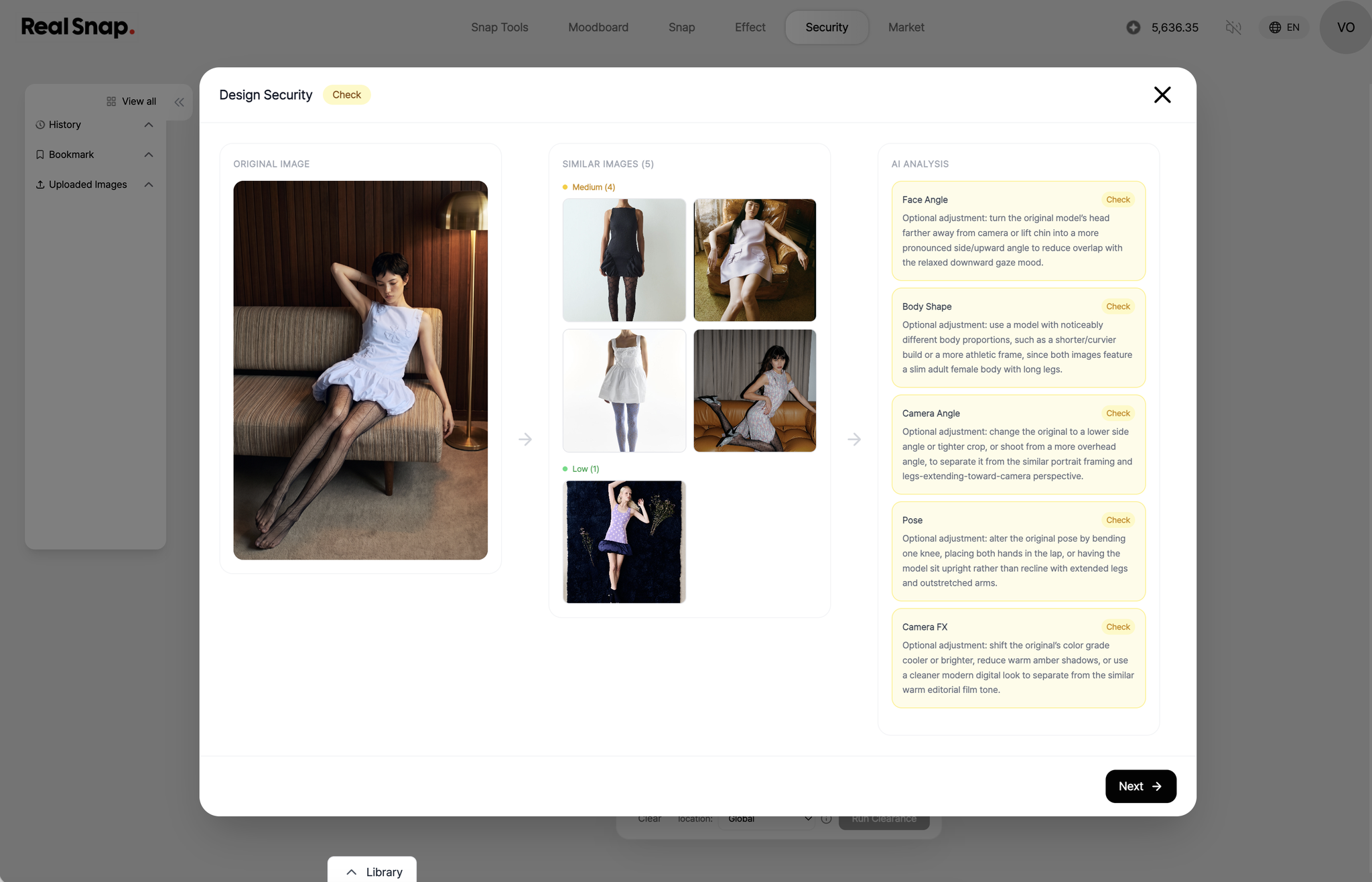
Clearance lets you check similarity risk item by item before you publish an image
RealSnap's Clearance checks similarity risk before you release a finished image to the public. It runs reverse image search together with AI analysis to gauge how closely the image resembles existing images, and points out specifically where the risk signals lie.