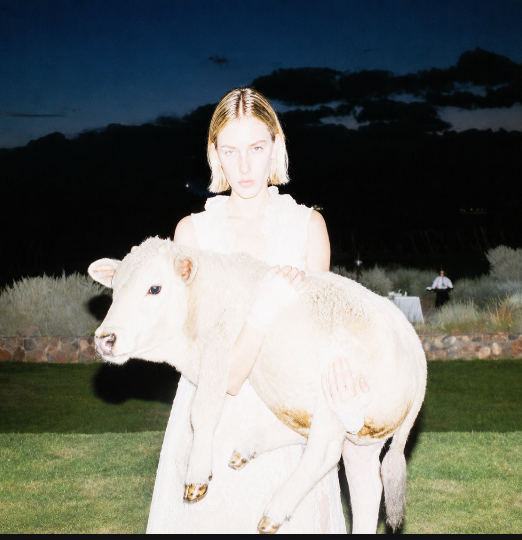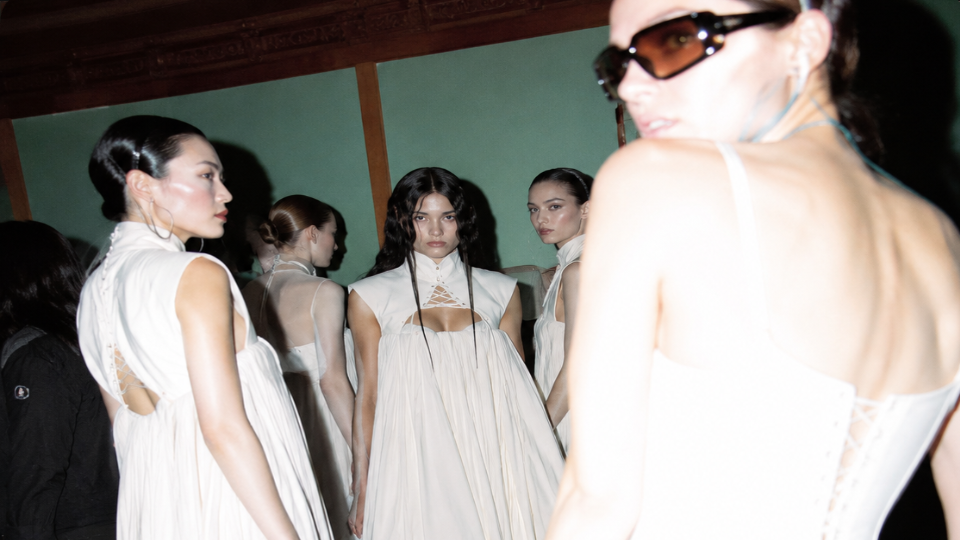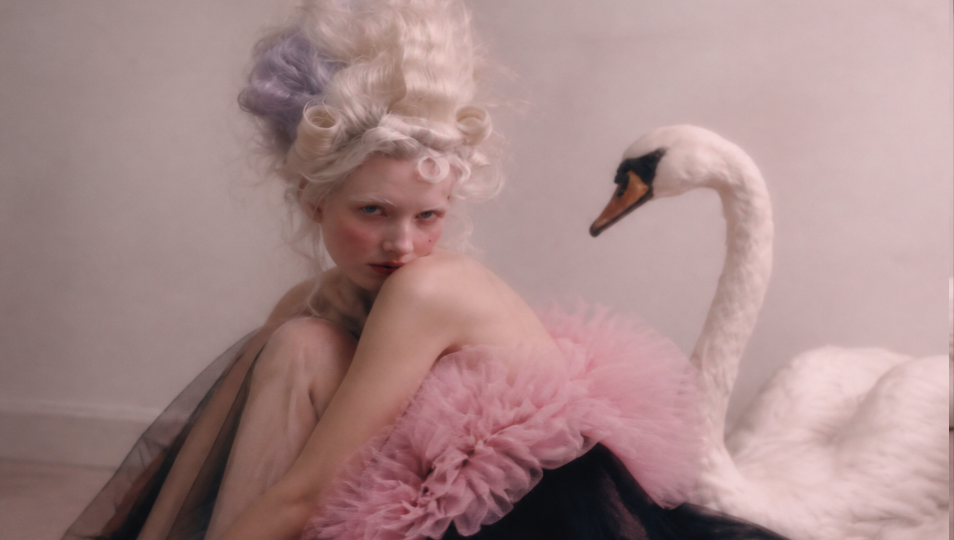
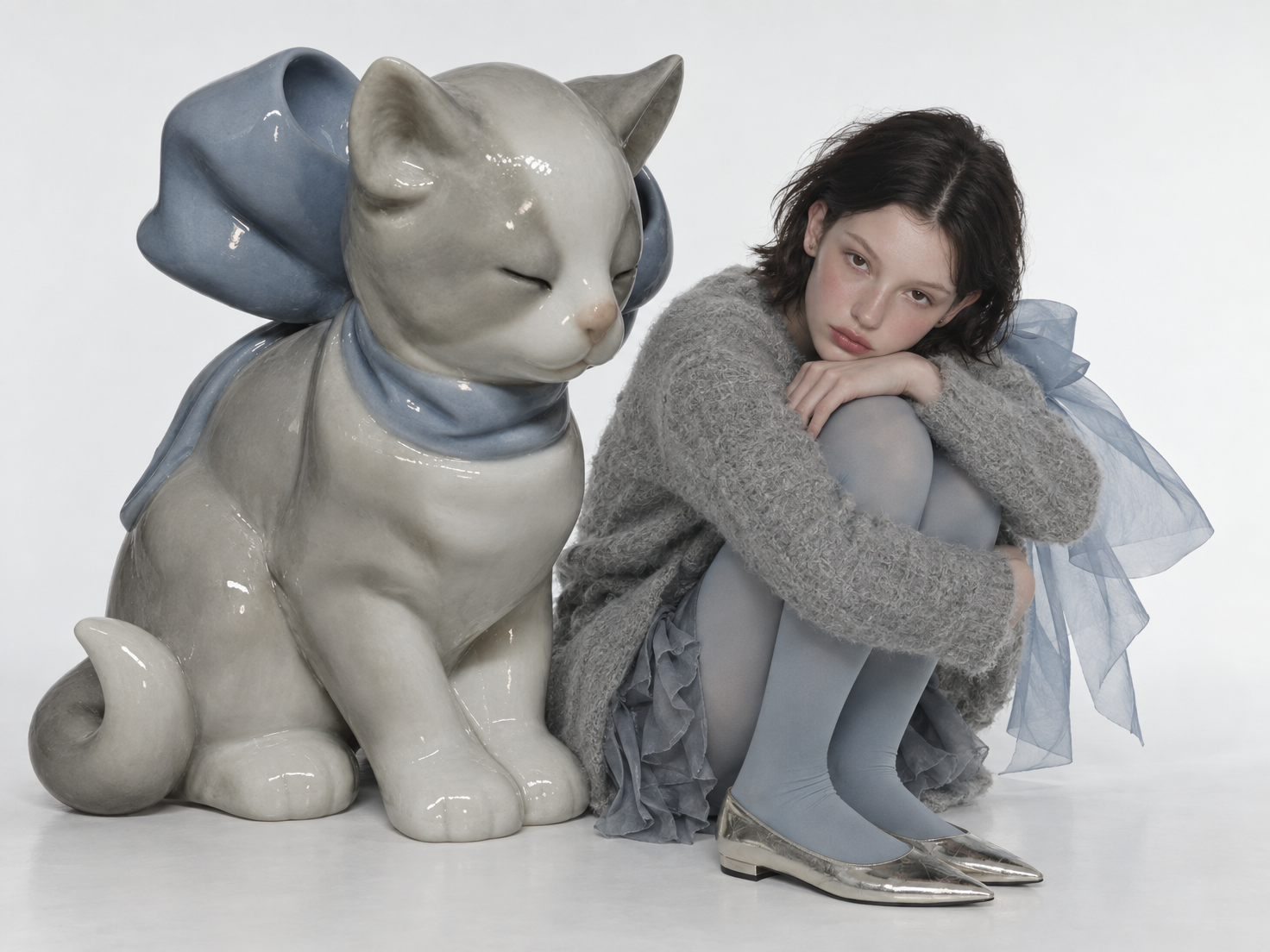
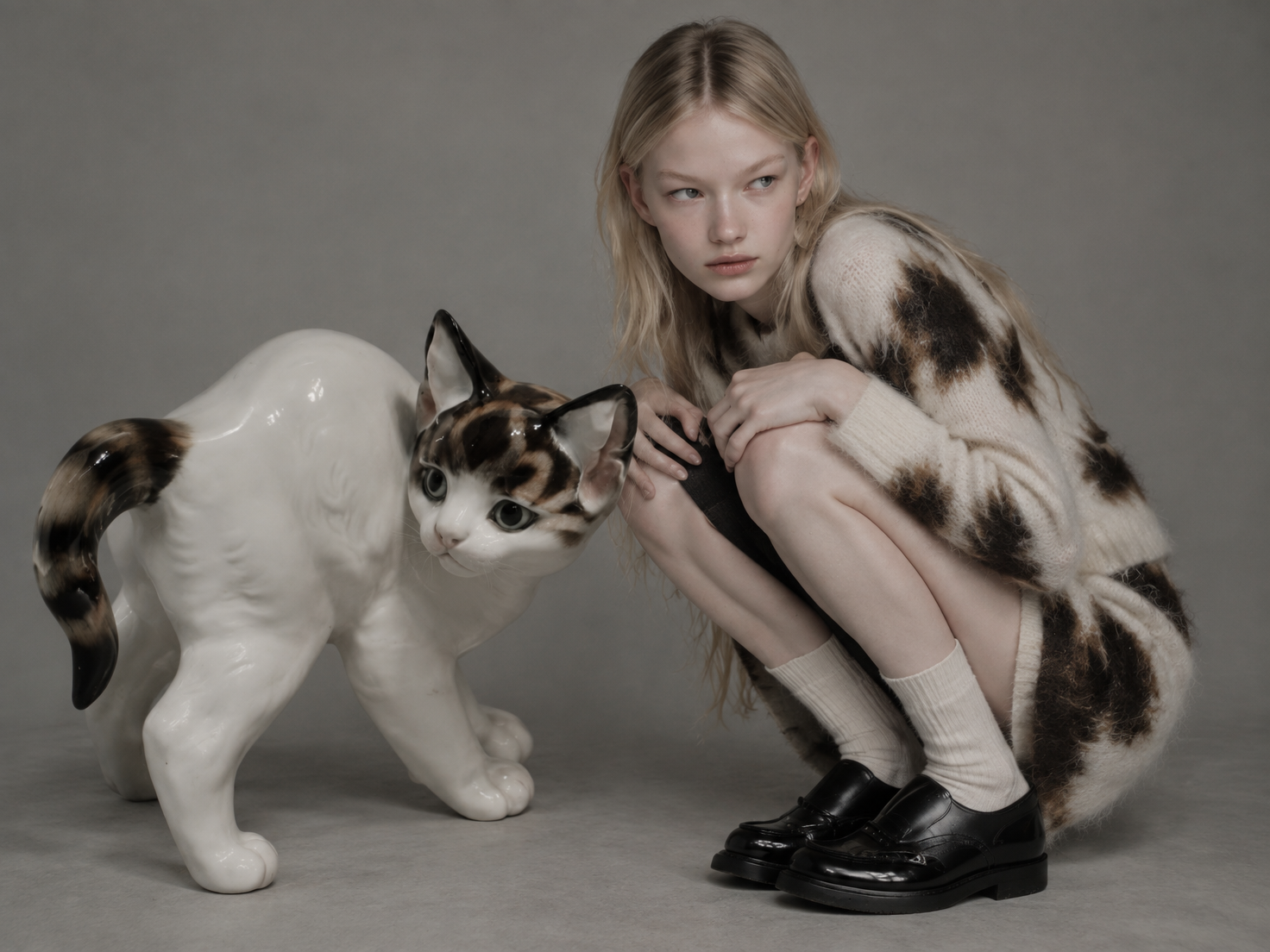
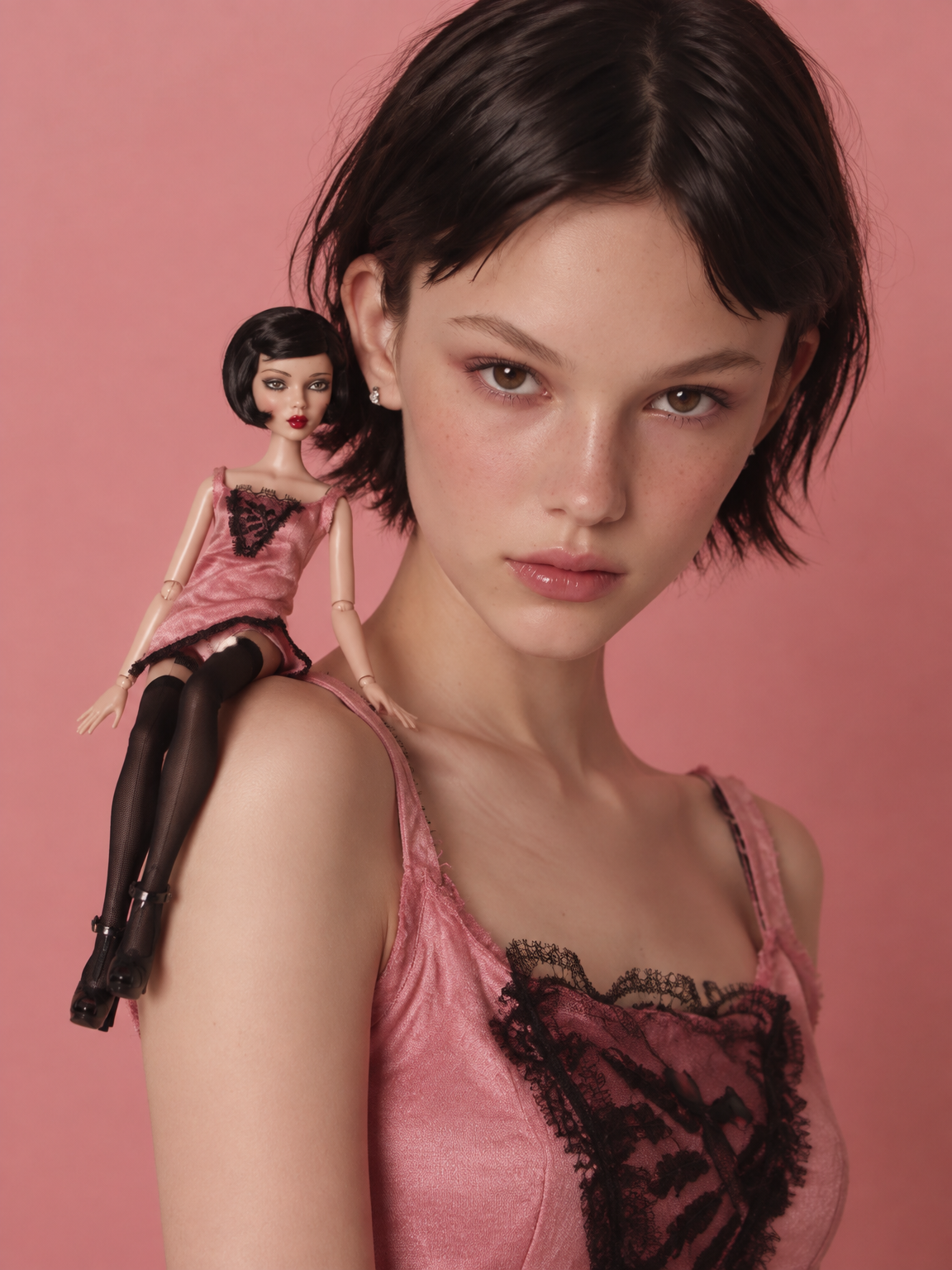
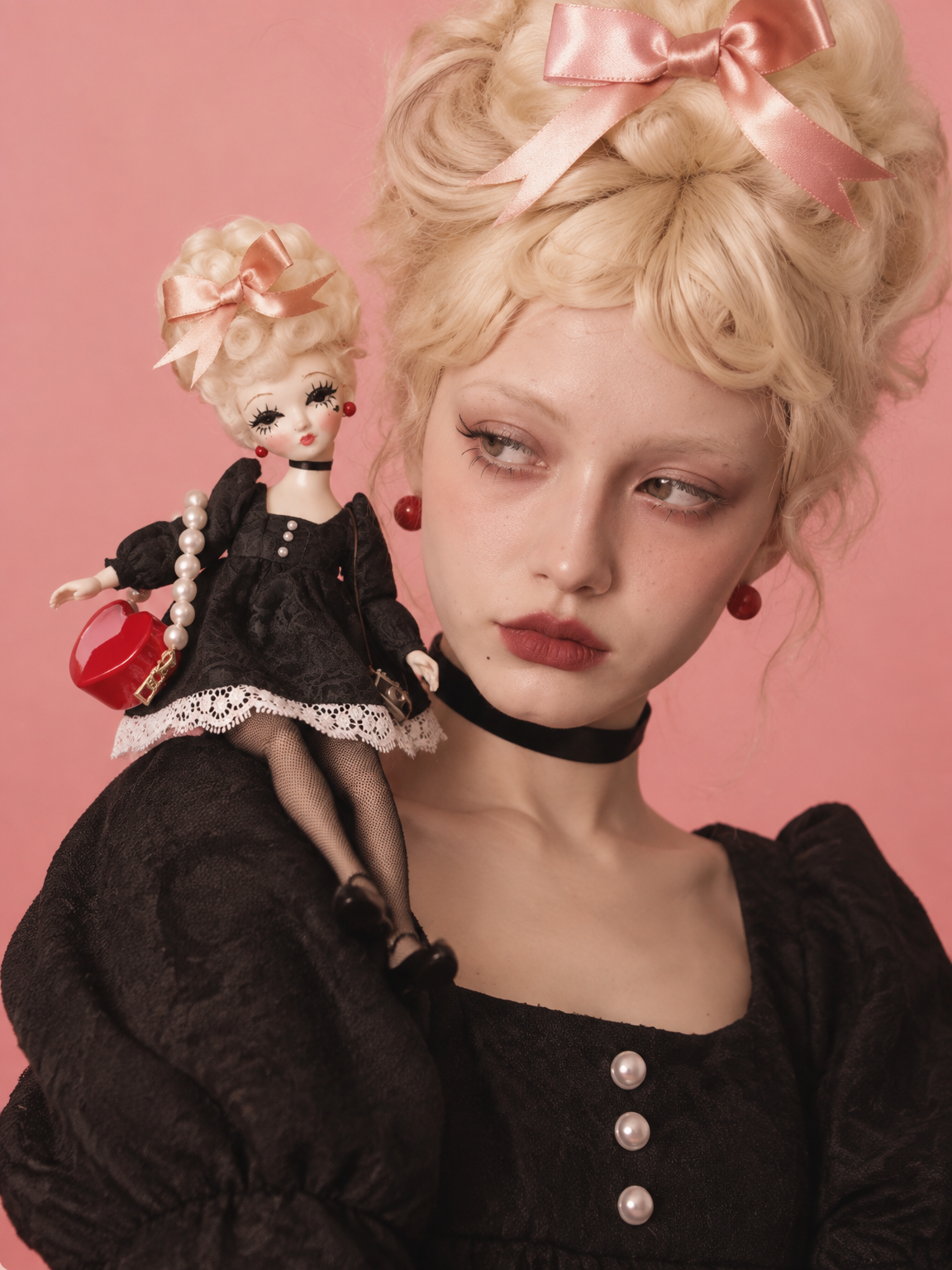
Dolls have always been made in our likeness. Dress their small bodies, arrange their hair, and paint their faces, and a character takes shape. The same doll can make an entirely different impression depending on its clothes, colors, expression, and pose. DOLL ALIKE reverses this familiar approach. This time, rather than a person dressing a doll, a model mirrors the doll’s clothes, makeup, and mood. Dolls are no strangers to fashion photography. Dressing a small body, arranging its hair, and creating a complete look: dolls and fashion have had plenty in common from the start. Tim Walker’s “Like a Doll,” published in Vogue Italia in 2012, is one of the editorials that illustrates this relationship most directly. Beside Lindsey Wixson stands a doll far larger than a person. Alongside the blonde-haired, rosy-cheeked doll, the model wears short pastel dresses, rounded collars, puff sleeves, and lace. Her skin is smooth, her hair elaborately styled. Simply placing a giant doll and a real model in the same frame situates the photographs somewhere between a real-world fashion editorial and an old-fashioned game of dolls. Fashion has returned to similar approaches ever since. Moschino’s Spring/Summer 2015 collection expanded Barbie’s wardrobe to human scale. With voluminous blonde hair, pink outfits, miniskirts, and accessories, the models became Barbies on the runway. Moschino went a step further, producing actual Barbie dolls alongside corresponding clothes for people to wear. A style that had existed on a small doll was scaled up and put on a real body. DOLL ALIKE begins with a similar approach. Rather than constructing a particular narrative, it starts by choosing a doll, then translating its colors, clothes, hair, and makeup onto a person. If a white rabbit has red patches and ribbons, those colors recur in the model’s clothes. Beside a stuffed toy with a pale blue ribbon sits a model in knitwear and stockings in the same tone. A porcelain doll’s flowers and ballet outfit become a real dress and accessories, while the colors of a large cat sculpture carry through to the model’s hair and clothing.
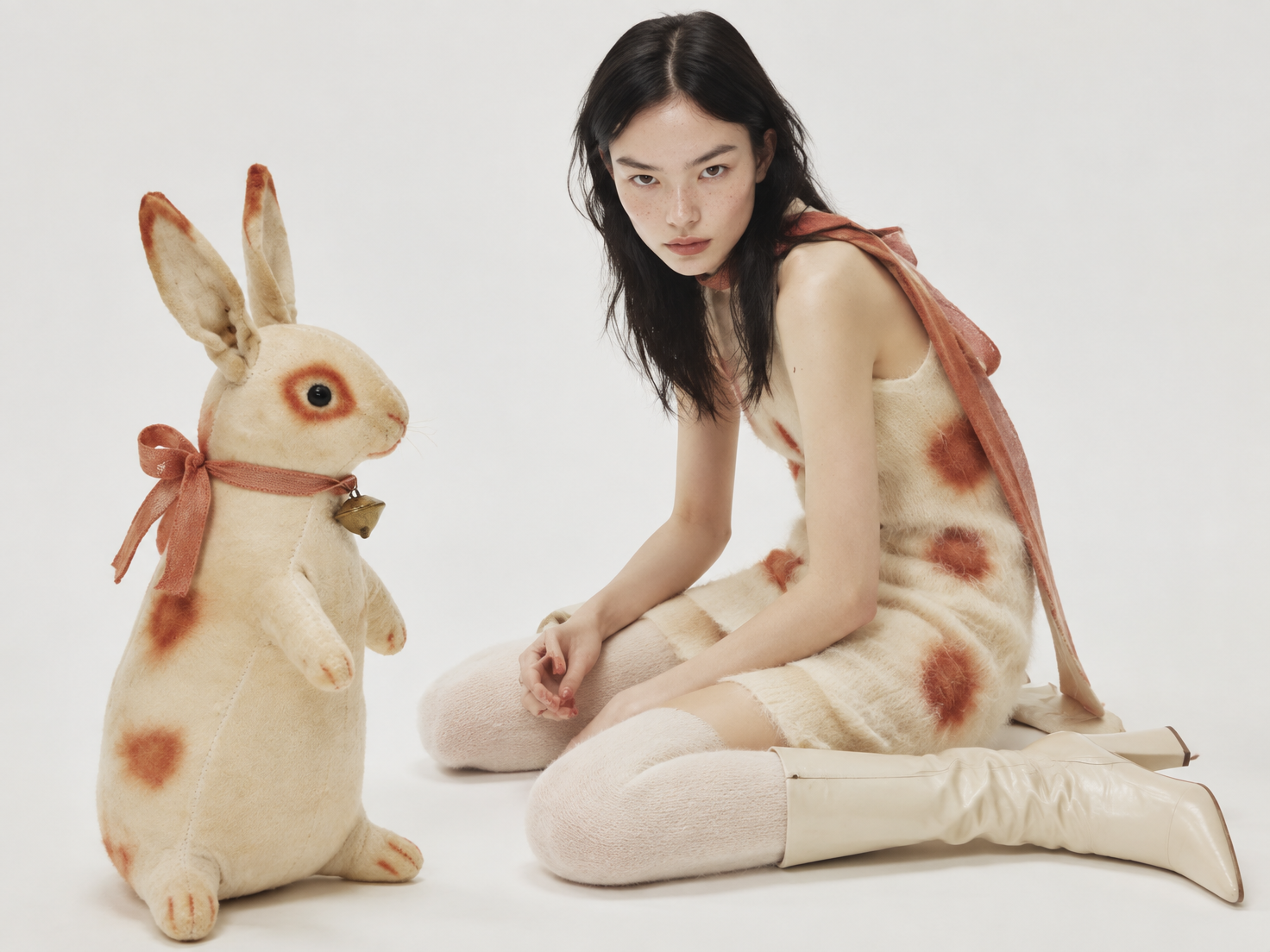
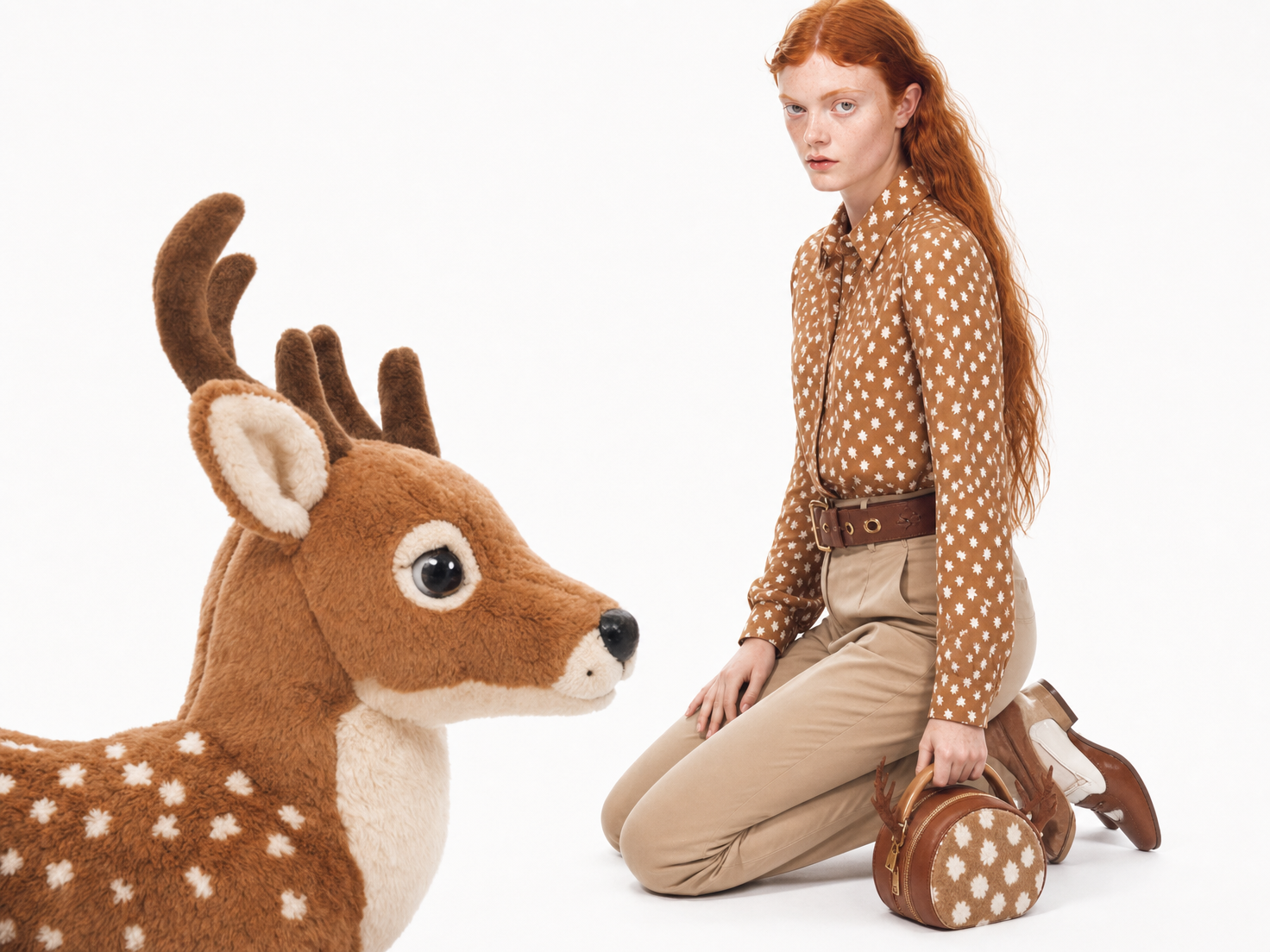
DOLL ALIKE does not aim for perfect replication. It is more interested in the moments when the two look alike but can never be entirely the same. Beside the smooth, cool surface of a porcelain doll, the texture of real skin is visible. Next to a stuffed toy’s soft, even fur, human hair falls into unruly strands. A doll’s eyes always look in the same direction, its expression unchanged, while a model’s face shifts with the slightest movement. A glance a little to one side or a tightening of the lips is enough to reveal the difference between doll and person once again.
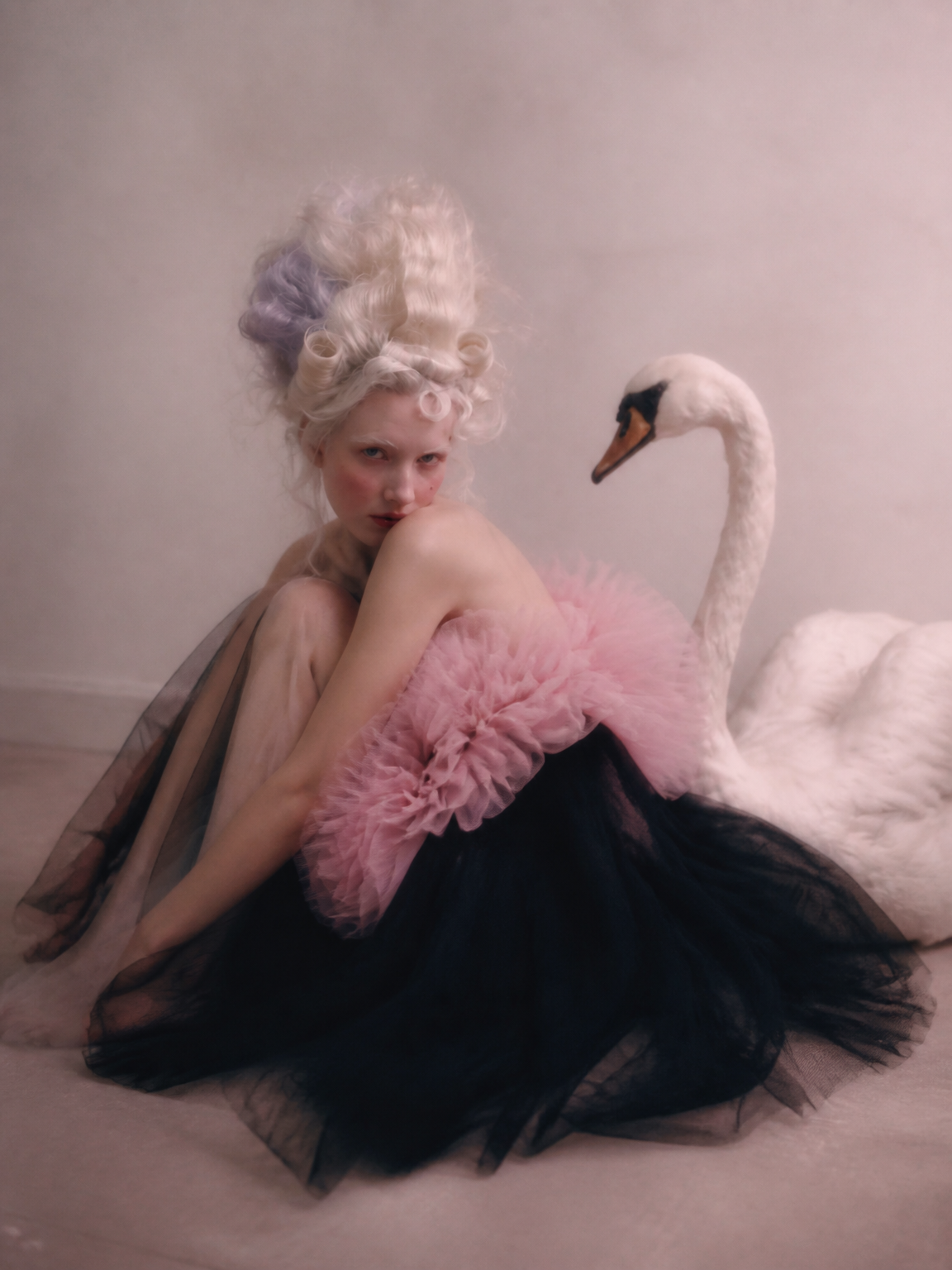
That is why the dolls in this editorial are more than mere props. They are treated as models in their own right, not as decorative objects placed beside a person. The camera regards them much as it does the models, and they are positioned to allow a narrative to develop between the two. In some scenes, a model cradles a doll, sits shoulder to shoulder with it, or faces it directly. In certain photographs, the doll appears larger than the model; in others, a small doll rests on the model’s hand. A change in scale alone keeps shifting their relationship. It is also difficult to call one the original and the other a copy. A doll is, after all, a simplified, scaled-down version of a person, but here the person takes on the doll’s appearance in turn. A doll that resembles a person and a person who resembles a doll meet again in a single frame. In the process, who is imitating whom becomes less and less important. As the same colors, materials, hair, and makeup recur, the two begin to look like a matching set.
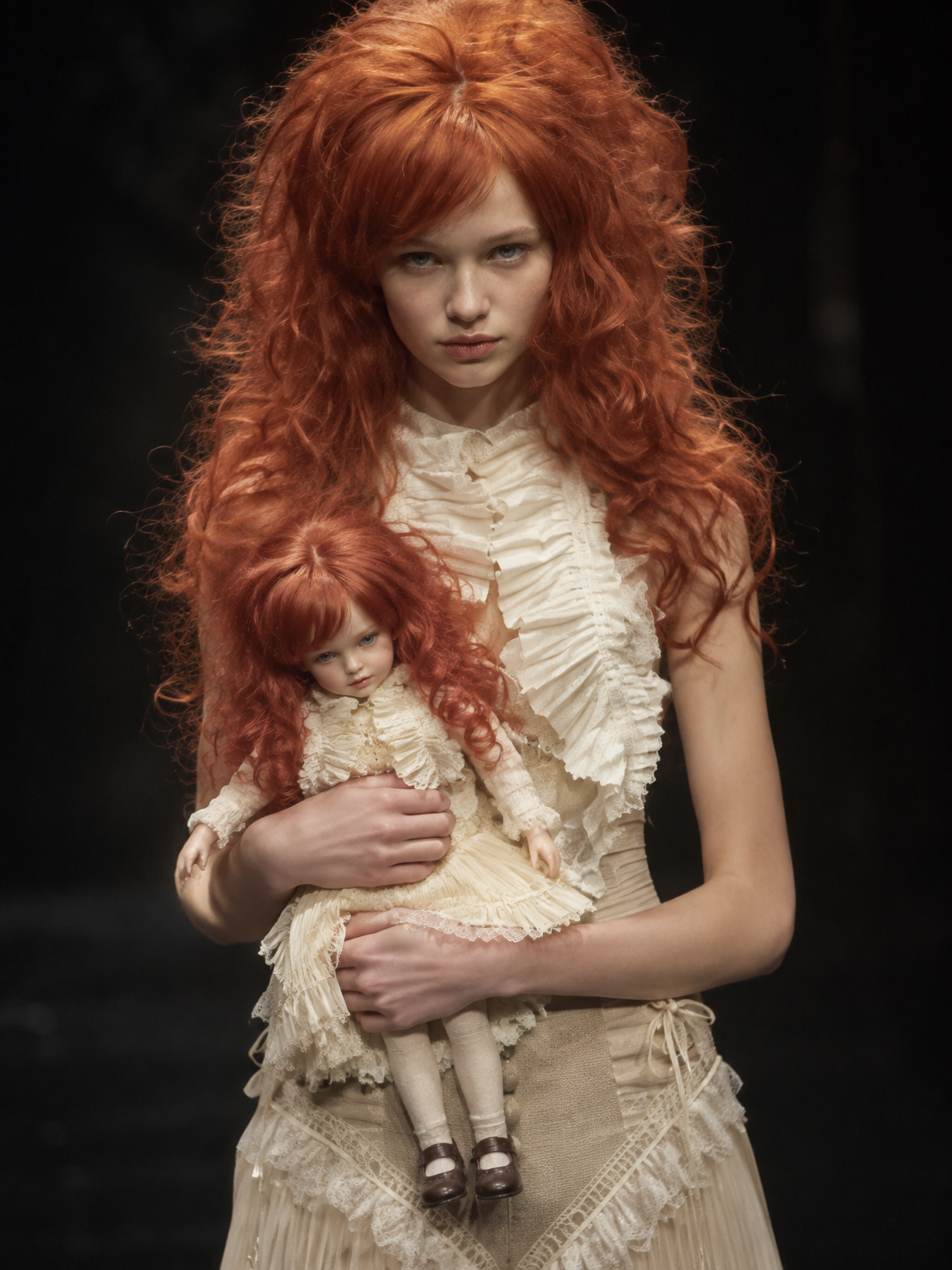
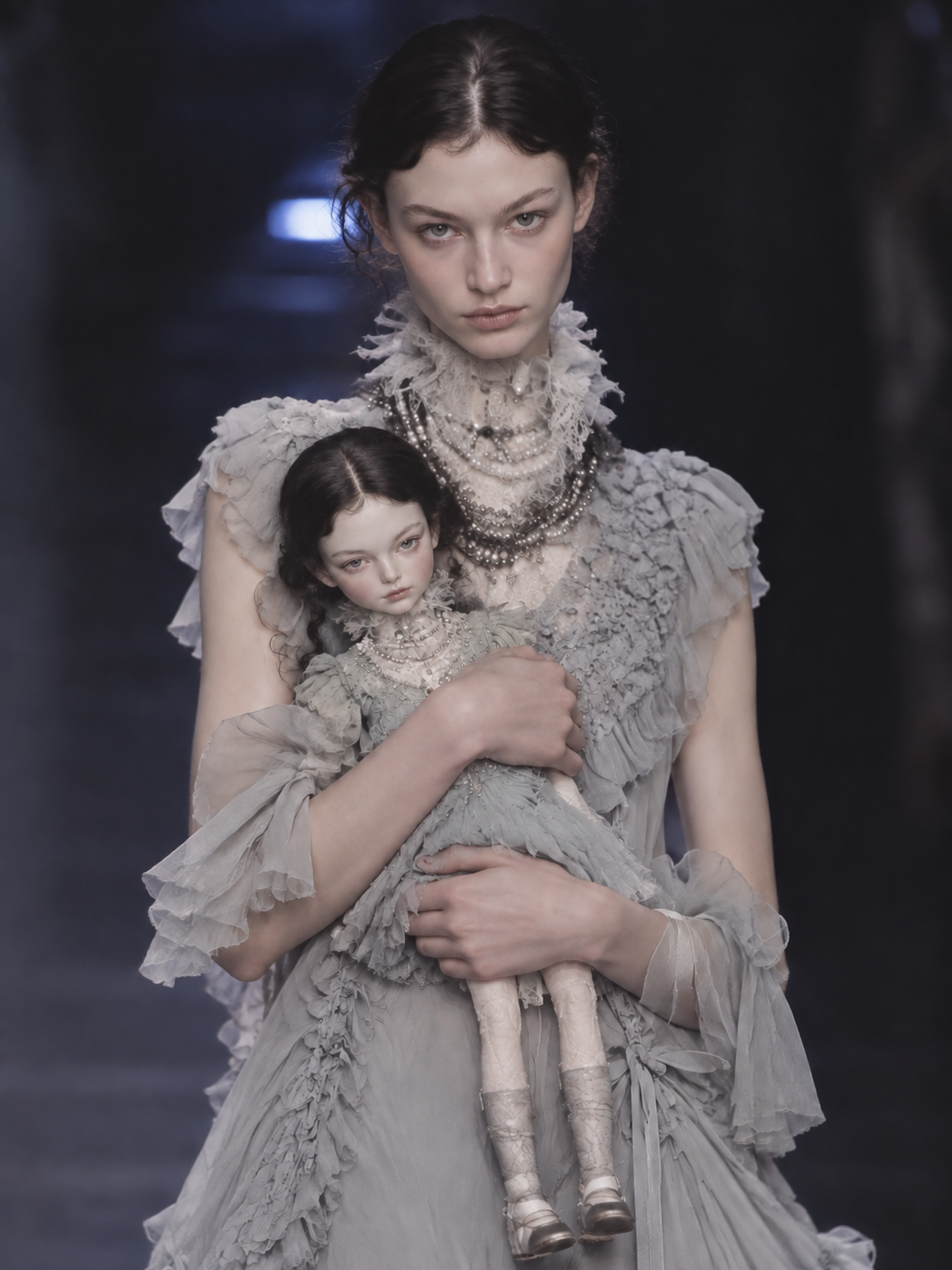
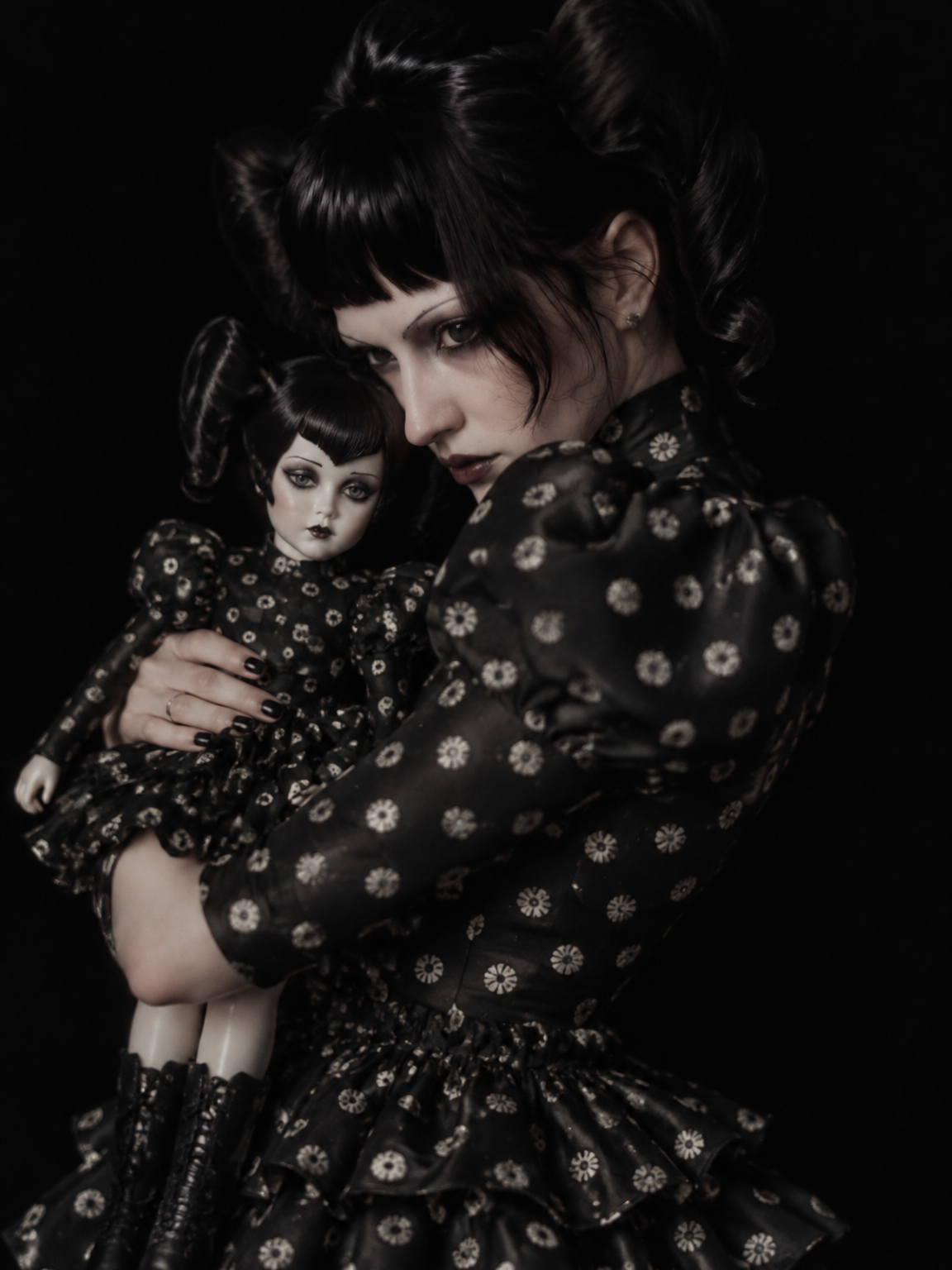
The backgrounds remain relatively simple. White, black, baby blue, pale pink, and cream—colors you might find on doll packaging—keep the focus on the models and dolls themselves. Rather than an abundance of decoration, there are just a few additions: small tables, chairs, ribbons, and flowers. At times, the images resemble vintage toy advertisements; at others, a fashion brand’s campaign. Some scenes feel like photographs of a doll collection in someone’s room. The makeup also draws directly on the dolls’ features. Defined lashes, thin brows, small lips, and a smooth complexion create faces that are a little simpler and more ordered than in real life. But they are not made to look entirely plastic. The natural redness of skin, flyaway hairs, and faint shadows beneath the eyes remain. Rather than making doll and model match too perfectly, it is more interesting to show the natural variations a person brings to the same styling.
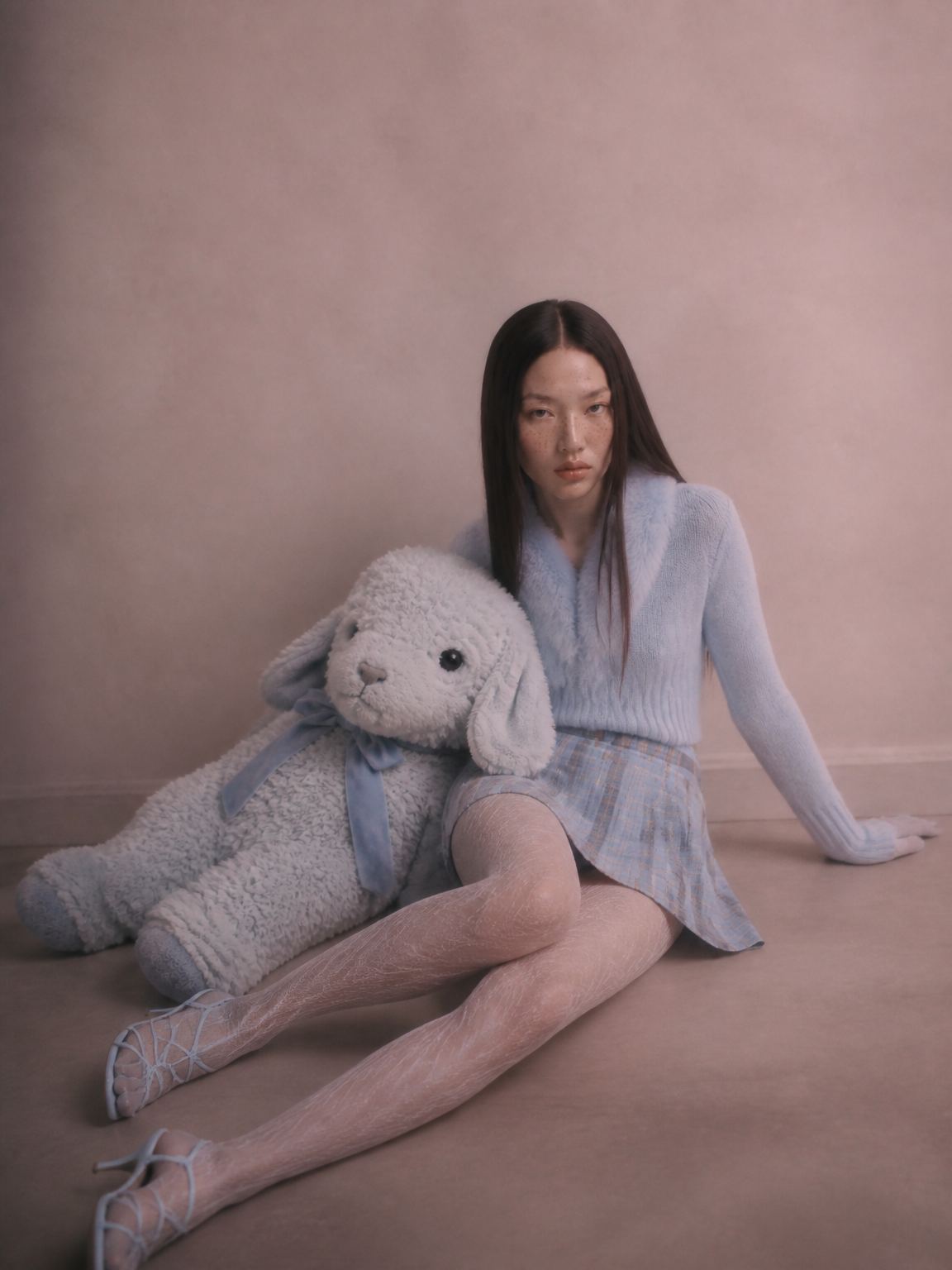
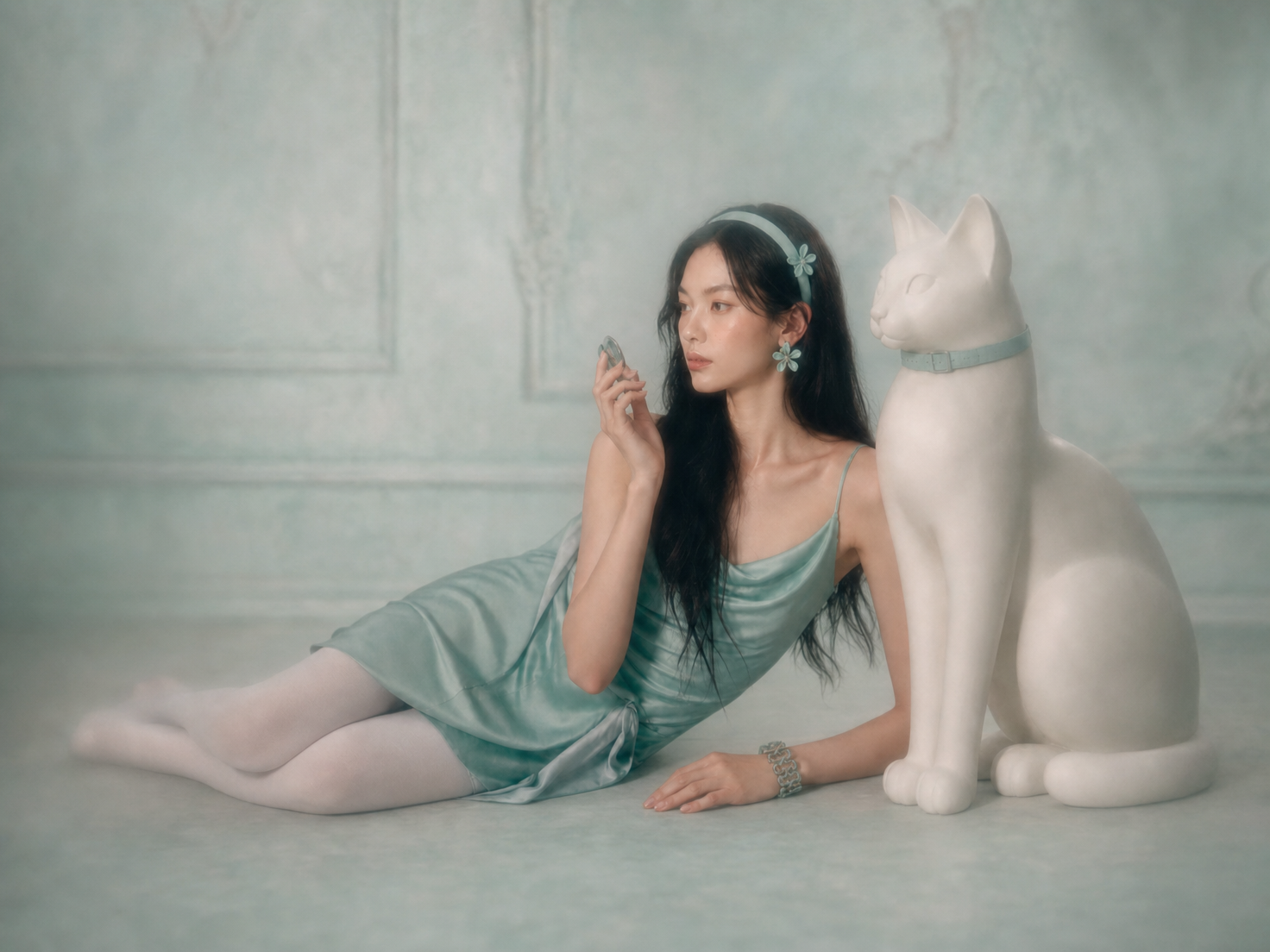
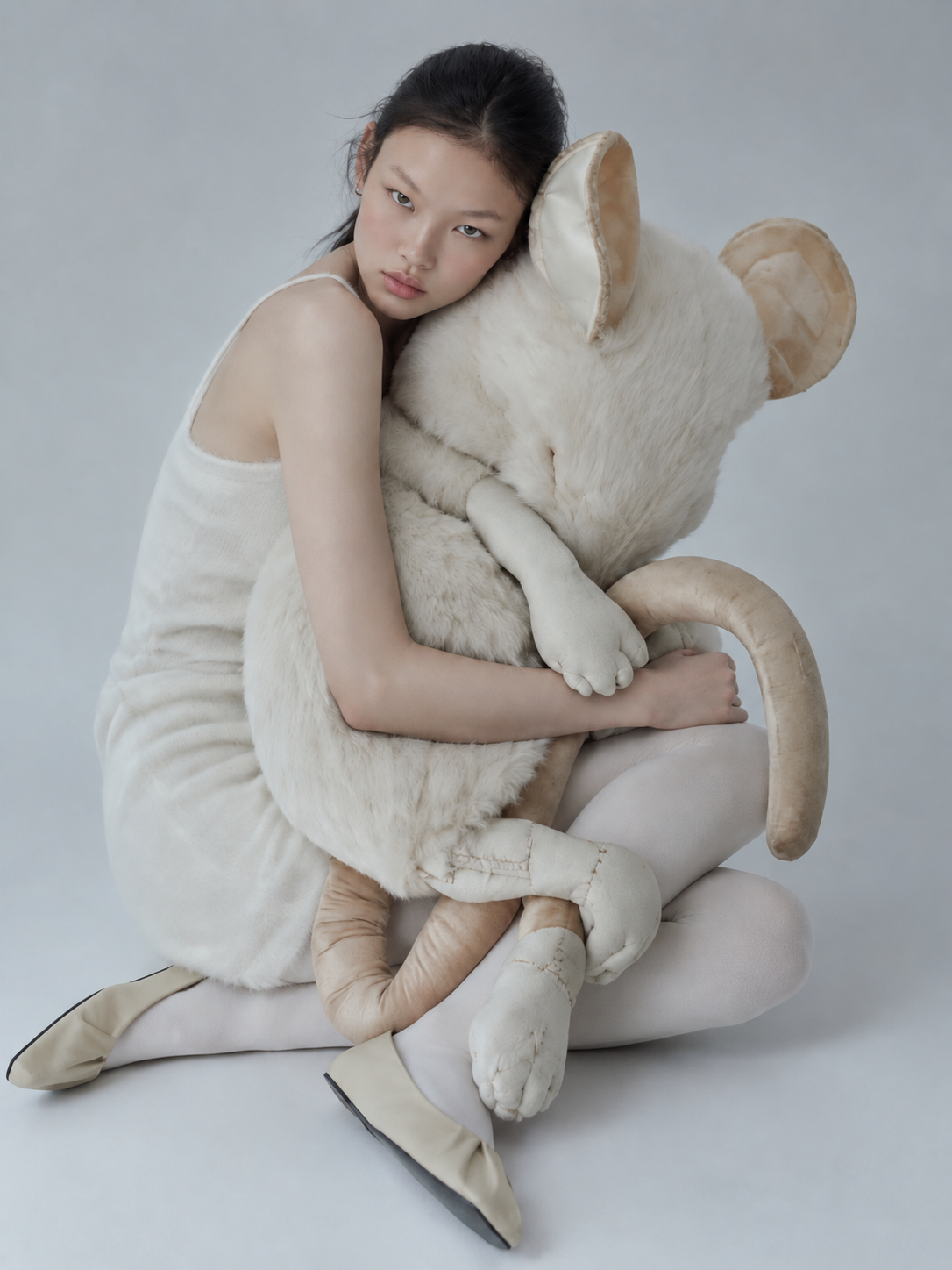
The two wear similarly colored clothes and the same embellishments, and naturally settle into similar poses. At first glance, they look like a matching set, but a closer look begins to reveal the differences. The doll’s clothes hold their shape, while the model’s crease with movement. Unlike the doll’s fixed hairstyle, human hair gradually falls out of place. The same is true of their expressions. The doll’s face never changes, while the model’s registers tiny shifts in the eyes or lips. This editorial makes no particular effort to erase those differences. Rather than making doll and person look exactly alike, it shows the distinctions that naturally emerge when their appearances are matched. Even in the same clothes and makeup, the doll still looks like a doll, and the person like a person. Their resemblance makes their differences all the more apparent. Even the same color looks different on porcelain and on skin, and the same ribbon takes on a different feel when attached to a doll than when moving on a real body. Small differences also emerge in the shape of a hand, the angle of a tilted head, or the way clothes fold. DOLL ALIKE leaves those differences as they are within a single frame, rather than smoothing them out or concealing them.
DOLL ALIKE treats resemblance less as an outcome than as a process. The model follows the doll’s appearance, while the doll looks more human than before when placed beside the model. Each moves a little closer to the other, but they never become entirely the same. That state of being almost alike yet unmistakably different—the subtle gap between replication and difference—is where this issue’s gaze lingers longest.